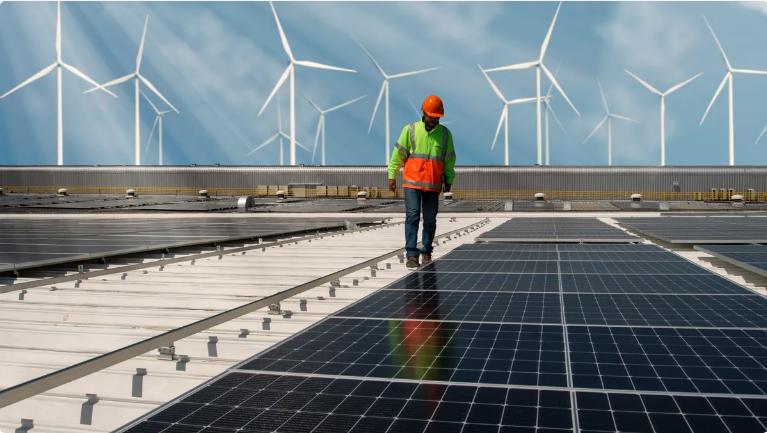
Recently, Norwegian energy company Equinor and its Brazilian subsidiary Rio Energy announced the official commissioning of the solar-wind hybrid power complex located in Serra da Babilônia, Brazil. This marks Equinor’s first wind-solar complementary project in Brazil, representing a key breakthrough in its renewable energy market expansion in South America and adding further momentum to the development of new energy in northeastern Brazil.
The project commenced construction in September 2024 and was successfully completed by the end of 2025. It integrates a newly built 140 MW solar power plant with the Serra da Babilônia wind farm, which has been in operation since 2018 with a capacity of 223 MW. By leveraging the complementary characteristics of solar and wind power generation across different times of day and seasons, the project achieves a continuous and stable output model: solar power supplies energy during the day, while wind power compensates at night and across varying seasons. This effectively addresses the intermittency issues associated with single-source renewable energy generation.
The newly built solar power station shares existing infrastructure from the wind farm, including transmission lines and operational maintenance centers, significantly reducing both construction and operational costs. It is estimated that the solar power plant will generate approximately 236 GWh of electricity annually, enough to meet the yearly electricity needs of about 143,000 Brazilian households. All electricity generated by the project will be supplied to the Brazilian domestic market through Danske Commodities, Equinor’s energy trading division.
The commissioning of this project increases Equinor’s total installed renewable energy capacity in Brazil to approximately 600 MW, further solidifying its position in the local market. Notably, this expansion aligns closely with the rapid development trend of Brazil’s renewable energy market. Data shows that northeastern Brazil has become the fastest-growing region in the country for new energy installations, with over 140,000 new photovoltaic systems added in the first three quarters of 2025, accelerating the clean energy transition process.
However, the project’s operation does not alter the new transformation strategy established by Equinor earlier this year. The company previously stated that it would slow down the pace of renewable energy expansion, shifting its focus from pursuing installed capacity scale to enhancing investment returns and shareholder value. Industry analysts believe that this wind-solar hybrid project, with its technical synergy and cost advantages, serves as a concrete implementation of Equinor’s “value-first” strategy and provides a replicable model for future projects of a similar nature.