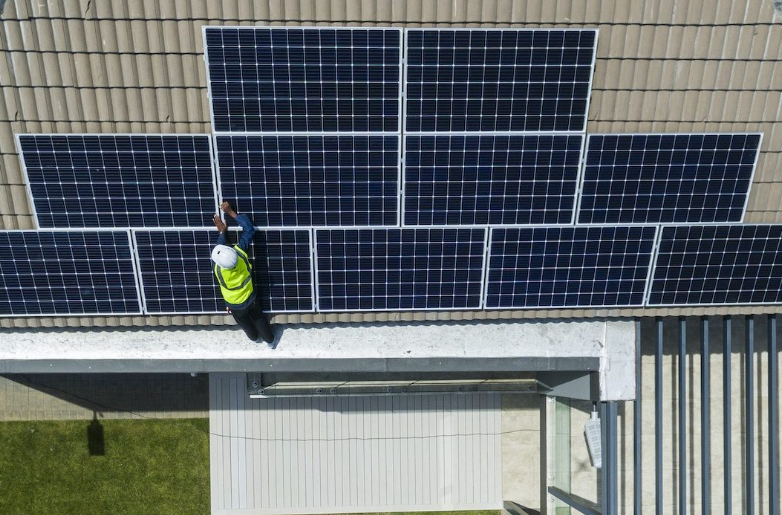
In 2025, the EU solar installation market reached a critical turning point, with annual newly installed capacity slightly dropping to 65.1 GW, a 0.7% decrease from 65.6 GW in 2024. This marks the first time since 2016 that EU solar installations have fallen below the previous year’s level.
According to the EU Solar Strategy launched in 2022, growth in EU solar installations is expected to remain sluggish in 2026 and 2027, with a reacceleration projected from 2028 to 2029. By 2030, annual installed capacity is forecast to recover to around 67 GW, roughly on par with 2025 levels. Under this scenario, the EU will struggle to achieve its long-term solar installation target of 750 GW by 2030, raising concerns about whether current policies and market conditions can support climate and energy goals.
Walburga Hemetsberger, CEO of SolarPower Europe, noted that the slight decline in installations holds strong symbolic significance. In 2025, solar power accounted for 13% of the EU’s electricity generation, and in June, it became the largest single source of electricity in the EU, highlighting its growing importance in the energy system. She called on policymakers to take decisive action to reinforce the electrification framework, enhance system flexibility, expand energy storage, and drive solar energy to continue leading Europe’s energy transition throughout the remainder of this decade.
After the energy crisis, many countries reduced or canceled support programs for rooftop solar, while easing household energy price pressures diminished the urgency for homeowners to invest in solar systems, leading to a sharp slowdown in the residential rooftop market. Household solar installations accounted for 28% of the EU’s newly installed capacity in 2023 but dropped to 14% in 2025.
Utility-scale solar projects have become the main driver of growth, accounting for over half of the EU’s new installations for the first time. However, they also face profitability pressures, as increased hours of negative electricity prices have reduced project revenues, creating uncertainty for investors. In terms of market distribution, Germany and Spain continue to lead in new installations, while France has risen to third place. Romania and Bulgaria have entered the top ten for the first time, whereas countries such as Italy and the Netherlands have seen declines in installations due to policy adjustments or market changes.
The report emphasizes that the EU must address common challenges at the bloc level. Policy recommendations include redefining energy security, prioritizing renewable energy, streamlining permitting processes, revitalizing the rooftop solar market, and strengthening supply chain resilience. Resolving these issues will be critical for reactivating the EU solar market and advancing its long-term climate goals.