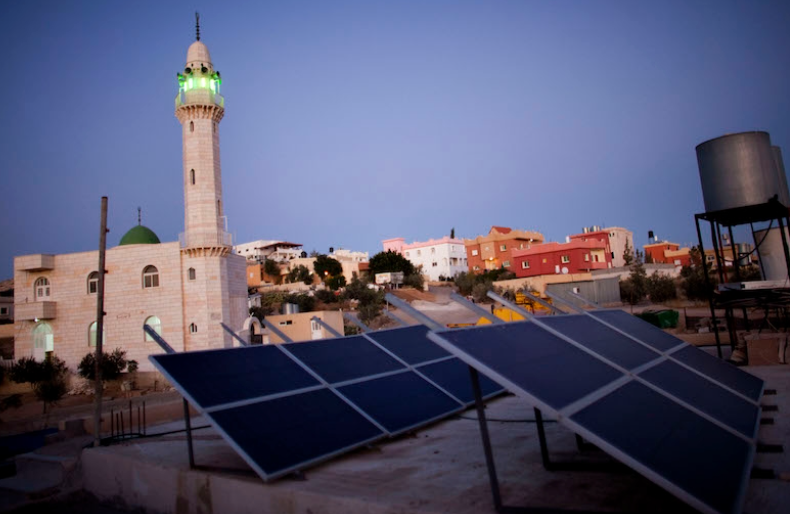
On December 11, 2025, a significant energy regulation officially took effect in Israel: all new residential buildings and certain types of towers are now required to install rooftop solar panels to obtain construction permits.
Which Buildings Are Subject to the Mandate? Exemptions Apply
According to regulations from the Israeli Planning Administration, two categories of buildings must comply:
- All new residential buildings nationwide—approximately 10,000 new homes are built annually in Israel, all of which must now include solar rooftops.
- Non-residential buildings with rooftop areas exceeding 250 square meters, including large commercial towers, factories, warehouses, and other large facilities.
However, not all buildings are required to adhere to the rule. Exemptions apply to structures such as wall-less sheds, mikvahs (Jewish ritual baths), coastal frontline buildings, protected historical buildings, and low-roof structures. The Israeli Ministry of Energy and Infrastructure revealed that the additional electricity generated under this policy will primarily come from the large rooftops of non-residential buildings.
Clear Requirements for Generation Capacity and Calculation Methods
The new regulation sets specific standards for the power generation capacity of solar panels:
- Residential buildings: A minimum of 5 kilowatts, suitable for small household solar systems to meet the daily electricity needs of an average family.
- Non-residential buildings: The required capacity (in kilowatts) is calculated by dividing the rooftop area (in square meters) by 20, with a cap of 15 kilowatts.
For example: A 250-square-meter rooftop requires a 12.5-kilowatt system, while rooftops of 300 square meters or more only need to install systems up to the 15-kilowatt cap, with no additional capacity required.
What Are the Installation Costs? Energy Storage Is Optional
According to an evaluation published by the solar installation comparison platform GreenDays in Globes, rooftop solar installation costs range from 45,000 to 90,000 new shekels (Israeli currency), with specific prices influenced by factors such as rooftop area, shape, and structure. Costs may rise further for uniquely designed rooftops.
To enhance energy utilization efficiency, energy storage batteries can be added as an optional feature. These batteries can increase the amount of electricity sold back to the grid and provide backup power for several hours during outages. However, this configuration is not mandatory under the regulation and requires homeowners to bear the additional cost.
Attractive Returns, Up to 15% Annual Yield
For homeowners, the economic returns from installing solar panels are highly appealing. The Israeli government has introduced a generous feed-in tariff policy:
- General areas: A subsidy of 0.48 new shekels per kilowatt-hour.
- Major cities (with populations of 50,000 or more, or soon to reach this threshold): The subsidy increases to 0.56 new shekels per kilowatt-hour.
- For comparison: Large commercial solar power stations receive a subsidy of only 0.07 new shekels per kilowatt-hour.
This means small-scale distributed solar systems in urban areas can sell electricity to the grid at higher rates. The Israeli Ministry of Energy and Infrastructure estimates that, after accounting for installation costs, selling electricity to the grid can yield an annual return of up to 15%. Additionally, flexible pricing options are available: either a lower initial rate that gradually increases with inflation or a higher initial rate for quicker cost recovery, with lower returns in later years.
It should be noted that the subsidy rates for solar systems on large building rooftops are lower and may be further reduced in the coming years, though specific adjustments have not yet been clarified.
Policy Rationale: Advancing Emission Reduction Goals and Optimizing Energy Structure
This new regulation is a core component of Israel’s plan to “add 100,000 to 150,000 new solar rooftops.” Currently, renewable energy accounts for only 15% of Israel’s electricity generation, leaving a gap to reach the 2030 target of 30%. While large-scale commercial solar power stations will contribute the majority of the additional electricity, small-scale distributed solar systems offer unique advantages:
- Proximity to urban consumption centers: Reduces the need for expensive power transmission infrastructure.
- No additional land use: Aligns with Israel’s limited land resources.
- Decentralized power generation: Enhances energy system resilience, as failures or security issues in individual systems are less likely to cause widespread blackouts.