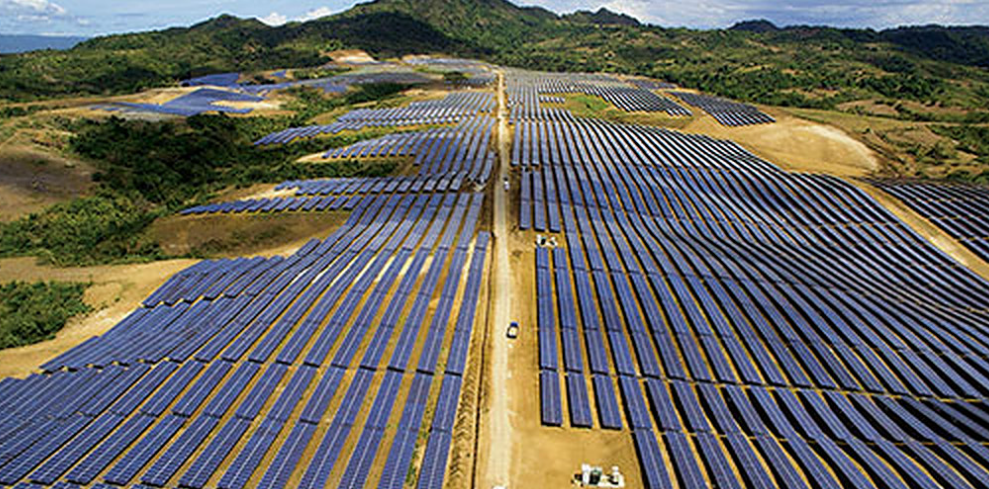
Recently, the Philippine Department of Energy (DOE) revealed that due to the failure of local developer Solar Philippines Power Project Holdings Inc. (SPPPHI) to commence construction on the projects it had won, its portfolio of 1.35 GW of solar and wind projects may be reopened to other developers. This marks the largest cluster of renewable energy projects to be rebid under the country’s Green Energy Auction Program (GEAP).
According to DOE records, SPPPHI and its subsidiaries secured seven projects in the first two rounds of GEAP bidding, including six solar and one wind project, with a total installed capacity of 1,350 MW. Among these, GEAP-1 projects were originally scheduled for delivery by December 25, 2025, and GEAP-2 projects by December 25, 2026. However, none of the projects have begun construction. Key initiatives such as the largest project—the 450 MW Tayabas Solar Project—and the 300 MW Kananga-Ormoc Solar Project remain stalled.
The failure to renew performance bonds is a critical factor triggering the rebid. Data shows that SPPPHI’s performance bonds, amounting to over PHP 14 billion, expired in August 2024 and were not renewed, affecting all stalled projects. Notably, the bond for the Kananga-Ormoc project, worth PHP 4.45 billion, and the General Santos project, worth PHP 2.96 billion, were not extended. Under GEAP rules, failure to maintain valid performance bonds constitutes a breach, allowing the DOE to forfeit the bonds and pursue civil legal action.
SPPPHI’s project defaults are not isolated incidents. DOE data indicates that out of 42 renewable energy service contracts awarded to the company’s subsidiaries between 2017 and 2022, 24 have been terminated, abandoned, or suspended. Currently, only nine of its projects are in commercial operation or good standing, while seven GEAP projects and three non-GEAP projects are listed as non-compliant.
This rebid coincides with a surge in renewable energy investment in the Philippines. The country has awarded 20 GW of renewable energy capacity between 2022 and 2025. The fourth round of GEAP, which introduced an electricity price indexation mechanism, has attracted significant participation from foreign developers. In 2024, the DOE initiated a cleanup of stalled projects, removing approximately 105 non-progressing initiatives. The release of this 1.35 GW project cluster is expected to further invigorate market competition.