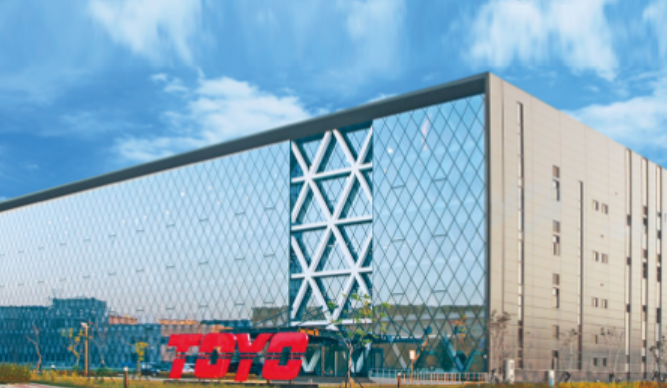
Japanese company TOYO has signed a one-year supply agreement with an unnamed U.S. polysilicon manufacturer to secure raw materials for its global production operations. The agreement will ensure a local supply of raw materials for TOYO’s 2 GW solar cell factory in Ethiopia and its 1 GW module factory in Houston, Texas, USA. TOYO has announced plans to expand its Ethiopian production capacity to 4 GW and its Texas module capacity to 2.5 GW later this year.
According to a report by SEIA, the United States had 33 GW of domestic polysilicon production capacity in operation by the end of 2025. However, currently active ingot and wafer production capacities amount to only 8.3 GW.
TOYO’s supply agreement aims to establish a dual-source supply chain to meet Foreign Entity of Concern (FEOC) compliance requirements. Federal regulations related to the “Big and Beautiful Act” came into effect on January 1, 2026, prohibiting federal tax credits for projects that use components from restricted foreign entities. By sourcing silicon materials from U.S. suppliers, TOYO can ensure its modules meet the eligibility criteria for the 30% federal investment tax credit.
Supply chain traceability has become a core consideration for the feasibility of photovoltaic projects in the United States. Previously, to avoid anti-dumping duties on imports from Southeast Asia, TOYO relocated its cell production to Ethiopia.
This polysilicon agreement is expected to provide TOYO with an additional layer of compliance assurance amid increasingly stringent domestic content requirements. TOYO stated that the company aims to offer developers in the United States, who face a construction deadline of July 4, 2026, supply chain services that comply with policy requirements.
According to the Solar Energy Industries Association (SEIA), the United States currently has three major solar-grade polysilicon suppliers: Hemlock Semiconductor in Michigan, Wacker Chemie in Tennessee, and REC Silicon in Washington.