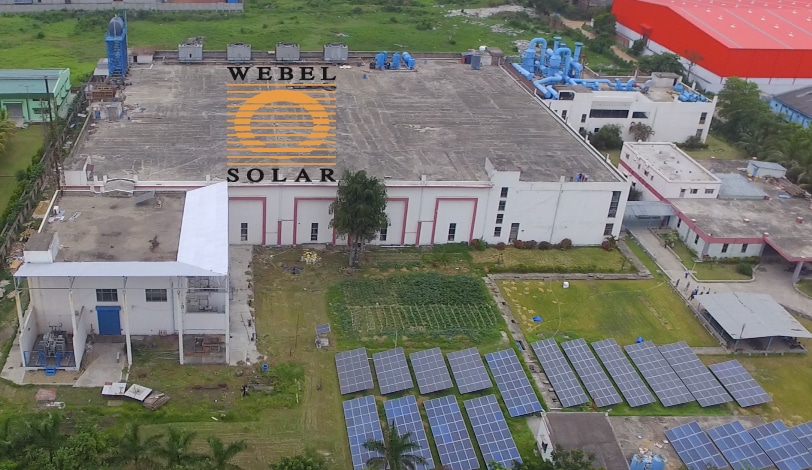
Recently, US-based Linton Crystal Technologies and Kolkata solar company Websol Energy have signed a Memorandum of Understanding to jointly establish a photovoltaic silicon ingot and wafer production line in India. Under the agreement, Websol will procure core production equipment from Linton and receive technical support.
Headquartered in Rochester, New York, Linton is a global leader in Czochralski monocrystalline furnaces and control systems, with thirty years of expertise in the field. The company offers end-to-end equipment solutions, from monocrystalline furnaces to crystal processing. It not only pioneered the modular Czochralski growth furnace but also introduced artificial intelligence for real-time monitoring of crystal growth, enabling early detection of crystal integrity issues. In this collaboration, in addition to providing equipment, Linton will also develop customized training programs for Websol’s team, covering the full spectrum of equipment operation and process optimization.
As a well-known domestic manufacturer of solar cells and modules based in Kolkata, Websol’s move directly addresses a key gap in India’s photovoltaic industry. Data shows that India’s current PV module capacity stands at 68.4 GW, while silicon ingot capacity is only 14 GW, leaving the upstream core segments heavily reliant on imports. Websol’s Managing Director stated that the partnership with Linton marks a significant milestone in building a comprehensive PV manufacturing ecosystem in India. “Producing silicon ingots and wafers domestically will effectively reduce dependence on imported critical raw materials and enhance local technological capabilities. Linton’s global experience and technological expertise are the core reasons we chose this collaboration.”
This collaboration comes at a time when India’s photovoltaic industry is expanding rapidly. The Indian government is vigorously promoting domestic manufacturing through policy measures such as the Production Linked Incentive (PLI) scheme and a 40% tariff on imported modules. In 2024, India added 24.5 GW of new PV installations, with demand expected to rise to 35–40 GW in 2025. Industry analysts believe that this US-Indian partnership aligns with India’s energy security and sustainable development goals while also providing Linton with a strategic foothold in an emerging market.
Both parties have expressed their commitment to leveraging their respective technological and market strengths to accelerate the establishment of the production line. They aim to seize the opportunities presented by India’s rapidly growing photovoltaic industry and contribute to the enhancement of the local manufacturing ecosystem.