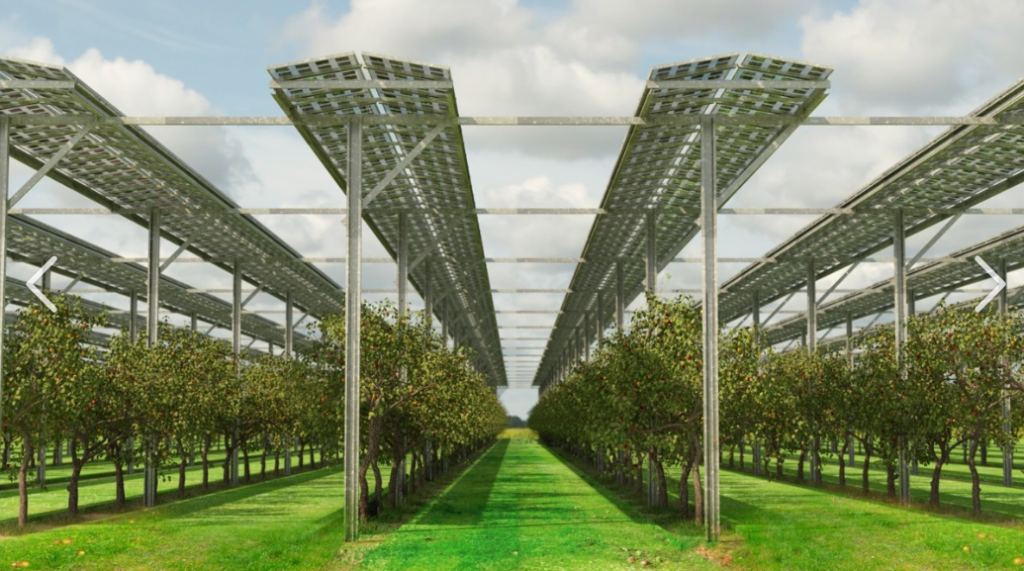
The Israeli government has approved a national agrivoltaics program, establishing clear regulatory, design, and permitting standards for the development of large-scale agrivoltaic projects. The program does not involve subsidies.
The government has also approved a proposal allowing Enlight Renewable Energy to advance a 300MW agrivoltaic and energy storage project near the Gaza border.
The program, initiated by the Ministry of Energy and Infrastructure and the Planning Administration, was previously approved by the National Council for Planning and Construction. It sets comprehensive rules for the deployment of large-scale agrivoltaic projects nationwide, aiming to protect landscapes and rural land while providing regulatory certainty for investors and the industry.
Under the program, the government has established a separate approval process for agrivoltaic projects, distinct from standard ground-mounted solar power plants. A key condition for ongoing project operation is the maintenance of active agricultural cultivation, with monitoring and penalty mechanisms in place to ensure land is properly used for agricultural purposes. These projects are also expected to enhance climate resilience by providing shade for crops and reducing water consumption.
Rafi Elmaleh, Director of the Planning Administration, stated: “In an era of climate change and increasing energy demand, agrivoltaic technology makes it possible to protect open areas and prevent them from becoming solely infrastructure. Approving this program is an important milestone.”
Following the release of the new regulations, the Israeli government approved the Ministry of Energy’s proposal to allow Enlight Renewable Energy to develop the 300MW large-scale agrivoltaic project near the Gaza border, equipped with energy storage facilities, through the National Infrastructure Program (NIP).
The Ministry of Energy stated that this would contribute to the rehabilitation of the Tekuma region. Electricity generated by the project will be transmitted to the national grid, helping Israel achieve its national target of generating 30% of its electricity from renewable sources by 2030.
In 2025, Israel also released another plan to promote the installation of 600MW of solar modules on the roofs of sports venues across the country by 2030.