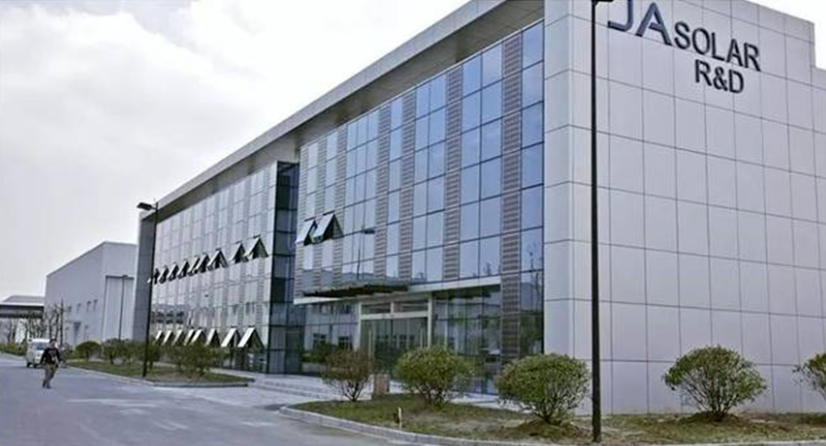
On December 18, 2025, the groundbreaking ceremony for the Atum Solar integrated PV manufacturing base was held in the Sokhna region of Egypt’s Suez Canal Economic Zone (SCZone). Kamel Al-Wazir, Egypt’s Deputy Prime Minister and Minister of Industry and Transportation, attended and witnessed the project launch. Li Shaohui, Vice General Manager of leading Chinese PV company JA Solar, signed the construction contract on behalf of the company.
The project, with a total investment of approximately $210 million, is planned to have an annual production capacity of 2GW solar cells, 2GW solar modules, and supporting 1GWh energy storage systems. This marks an acceleration in the localized deployment of Chinese PV enterprises in the Middle East and North Africa (MENA) region.
By the end of 2025, cumulative investments by Chinese companies in Egypt’s PV industry chain (including segments such as cells, modules, and PV glass) have surpassed $1.5 billion, covering manufacturing base construction by multiple leading enterprises and promoting Egypt as a regional green energy manufacturing hub.
1. Project Details: Multinational Joint Venture Drives Localization of Egypt’s PV Industry Chain
The Atum Solar integrated PV manufacturing base is located within the TEDA Industrial Park in Egypt’s Suez Canal Economic Zone, covering an area of approximately 200,000 square meters.
The project is reportedly a joint investment by multinational partners including China’s JA Solar, UAE’s Global South Utilities, Bahrain’s Infinity Capital, and Egypt’s AH Industrial Management Consulting.
The project plans to construct three factories. Upon completion, it will have an annual production capacity of 2GW high-efficiency solar cells and 2GW high-power solar modules, along with supporting 1GWh energy storage system capacity.
According to the project plan, the entire output of solar cells will be exported to the global market, while the solar modules and energy storage systems will primarily supply the Egyptian domestic market and surrounding regional markets in the Middle East and Africa. This layout aims to be close to local demand while leveraging Egypt’s geographical advantage to expand exports.
The project emphasizes local procurement. Key raw materials such as aluminum and glass needed for production will be prioritized from local Egyptian suppliers. This not only helps reduce costs but will also drive the development of local upstream and downstream industry chains, with expectations of creating hundreds of direct jobs.
As the core technology provider, JA Solar will leverage its expertise in high-efficiency cells and modules to inject advanced manufacturing experience and management models into the base’s construction and operation. The company’s Vice General Manager, Li Shaohui, signed the project construction contract at the groundbreaking ceremony, reflecting JA Solar’s commitment to the project.
In his speech at the ceremony, Egyptian Deputy Prime Minister Kamel Al-Wazir noted that this project is an important step for Egypt in promoting PV industry localization and reducing import dependence. The participation of international companies like JA Solar will bring technological upgrades and management enhancements to Egypt’s manufacturing sector.
The project has progressed rapidly, from signing a Memorandum of Understanding in November 2024, to completing the land use rights contract signing in August 2025, and officially commencing construction in December. This speed is attributed to the tax incentives and infrastructure support provided by the Suez Canal Economic Zone, as well as policy support from the Egyptian government for renewable energy projects. Walid Gamal El-Din, Chairman of the Suez Canal Economic Zone Authority, stated that this base is a strategic achievement in attracting high-quality investment and building a green economic ecosystem.
2. JA Solar’s MENA Layout: Dual Progress with Egypt Project and Oman Factory
JA Solar’s Egypt project is a key move in its globalization strategy in the MENA region. The company’s overseas business accounts for over 50% of its total. To respond to international trade policy changes and growing overseas market demand, JA Solar is accelerating its overseas capacity building.
Following the Egypt project, on December 19, 2024, JA Solar Technology announced plans to invest approximately 3.957 billion RMB in the Sohar Freezone in Oman to build a project with an annual production capacity of 6GW high-efficiency solar cells and 3GW high-power solar modules. The project plans to establish a new project company for operation and will introduce external shareholders to advance it in a joint venture form, implemented in phases to control risk. Upon completion, the Oman project will further enhance JA Solar’s production capacity for high-efficiency products overseas, serving high-value markets such as the Middle East and Europe/America.
JA Solar’s layout in the Middle East reflects a shift towards a “locally made, locally used” model. Similar to the Egypt project, the Oman factory will also leverage local resources and policy advantages to reduce investment risk.
Industry observers note that renewable energy demand in the Middle East region is strong, and countries like Oman and Saudi Arabia offer stable and low-cost electricity supply, which is conducive to PV manufacturing. Previously, Junda Optoelectronics also planned a 5GW high-efficiency N-type cell capacity in Oman, expected to commence production in 2025.
The successive advancement of JA Solar’s Egypt and Oman projects reflects the strategic adjustments of Chinese PV enterprises under trade barriers. By introducing local or regional capital (such as UAE’s Global South Utilities) through joint ventures and cooperation, JA Solar not only diversifies risk but also gains access to policy subsidies and market entry facilitation. This is similar to the model adopted by Jinko Solar and TCL Zhonghuan, which partnered with subsidiaries of Saudi Arabia’s Public Investment Fund in Saudi Arabia.
3. Egypt’s PV Manufacturing Boom: Initial Signs of Chinese Enterprise Cluster Effect
Egypt is becoming a new hotspot for Chinese PV enterprises’ overseas deployment. The Suez Canal Economic Zone, with its strategic location, abundant solar resources, and preferential policies, is attracting several Chinese companies to invest in manufacturing bases.
As early as 2024, Borui New Energy (EliTe Solar) broke ground on a 2GW solar cell and 3GW module project in the China-Egypt TEDA Suez Economic and Trade Cooperation Zone, with the first phase expected to commence production in September 2025.
Furthermore, CSG A announced plans to invest 1.755 billion RMB in building a new PV glass production line in Egypt. China Glass Holdings Limited’s new energy glass project in Egypt also started construction in December 2024. These projects cover segments such as cells, modules, and glass, forming an industry chain cluster.
The Egyptian government aims to source 42% of its electricity from renewable energy by 2030, with solar accounting for 22%, requiring significant new installed capacity.
The Suez Canal Economic Zone has become a green energy manufacturing hub. Since 2024, it has signed multiple Memoranda of Understanding, with expectations of attracting tens of billions of dollars in investment over the next decade. The participation of Chinese companies not only exports technology but also supports Egypt’s energy security and export-oriented strategy through localized production.
Compared to other Chinese enterprises, JA Solar’s Egypt project has a leading scale and includes energy storage support, reflecting a full-chain layout. The entry of multiple enterprises will also create a cluster effect, sharing supply chains, talent, and policy benefits.
4. MENA PV Overseas Expansion Trend: Localized Cooperation Becomes Mainstream
The MENA region is emerging as a new destination for Chinese PV overseas expansion. Countries like Saudi Arabia, Oman, and Egypt have huge renewable energy demand. Combined with local procurement requirements, establishing factories has become a trend for Chinese companies to expand into these markets.
Jinko Solar plans a 10GW cell and module project in Saudi Arabia. TCL Zhonghuan is deploying a 20GW crystal and wafer factory. GCL Technology is advancing a full industry chain project in the UAE.
JA Solar’s dual-project layout further strengthens this landscape. Industry analysis points out that joint ventures with local capital help obtain subsidies, secure electricity supply guarantees, and gain market priority, especially amidst intensifying competition.
In the Egypt project, the participation of UAE capital provides political and financial support, leveraging its influence in the Middle East to facilitate project implementation. Similar models offer lessons for subsequent enterprises: avoid saturated markets and turn to countries with lower costs and greater potential.
Overall, the localized investments of Chinese PV enterprises in the MENA region not only respond to global trade uncertainties but also assist in local energy transitions. The commencement of JA Solar’s Egypt base marks the acceleration of this trend. In the future, with more projects going into production, the region is expected to become a new global hub for PV manufacturing.