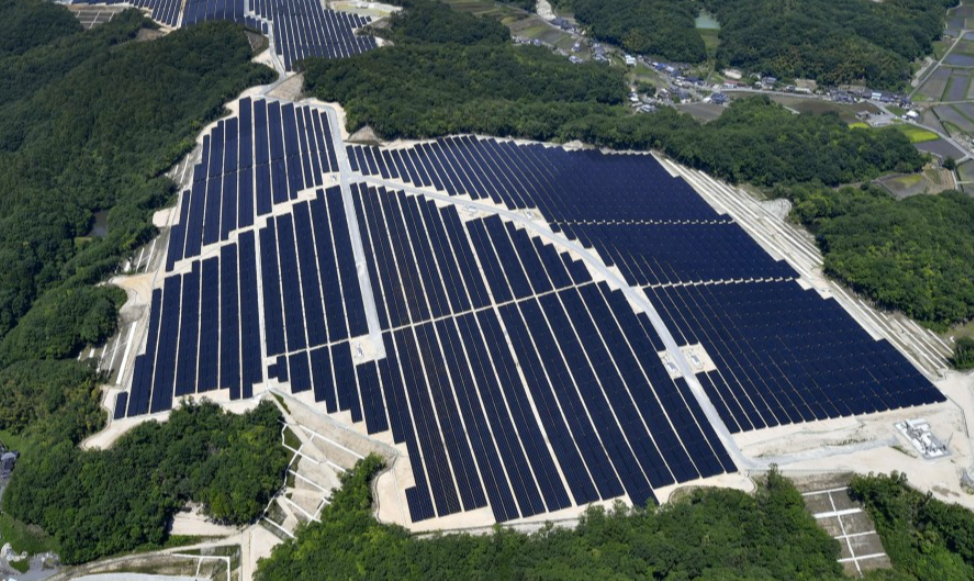
Recently, according to a Reuters report, the Japanese government has introduced a series of regulatory measures targeting large-scale solar power plants, explicitly stating that subsidies for such projects will be terminated from 2027 onwards.
An official from Japan’s Ministry of Economy, Trade and Industry revealed that the government plans to end the Feed-in Tariff (FIT) and Feed-in Premium (FIP) systems for ground-installed large-scale commercial solar power projects starting from the new fiscal year in April 2027. These two systems are core subsidy policies in Japan’s renewable energy sector. The FIT provides electricity producers with fixed purchase prices for a predetermined period, while the FIP offers premium subsidies on top of market-based electricity sales. However, specific details such as the project size threshold for subsidy termination will be finalized later.
Sanae Takaichi had previously publicly stated that most solar panels are produced overseas, particularly in China, and that large-scale solar facilities pose risks to Japan’s landscapes and natural ecosystems. This viewpoint has become a significant motivation for the policy adjustment. The discussion on policy adjustments can be traced back to controversies surrounding large-scale solar development projects in areas such as the Kushiro Wetland National Park in Hokkaido. In response, Japan’s Ministry of Economy, Trade and Industry and the Ministry of the Environment initiated consultations to strengthen regulations in September this year.
In addition to terminating subsidies, the Japanese government also plans to expand the scope of environmental assessments. Under current regulations, solar projects below 30 megawatts are exempt from national-level environmental assessments. This requirement may be further extended in the future. It is worth noting that the policy adjustment does not entail a comprehensive tightening of support for renewable energy: support for existing solar facilities and residential installation projects will continue. At the same time, the government will increase research and development support for perovskite solar cells, promoting the development of this next-generation solar technology pioneered in Japan.
Industry experts worry that this policy adjustment may further slow the pace of solar farm development in Japan. Currently, Japan’s offshore wind power projects are already facing significant uncertainty due to rising costs and developer withdrawals. Combined with the termination of subsidies for large-scale solar projects, this could hinder Japan’s renewable energy development progress. Data shows that Japan’s renewable energy electricity generation growth rate dropped to a low of 5.9% in 2023, the lowest level since 2010.