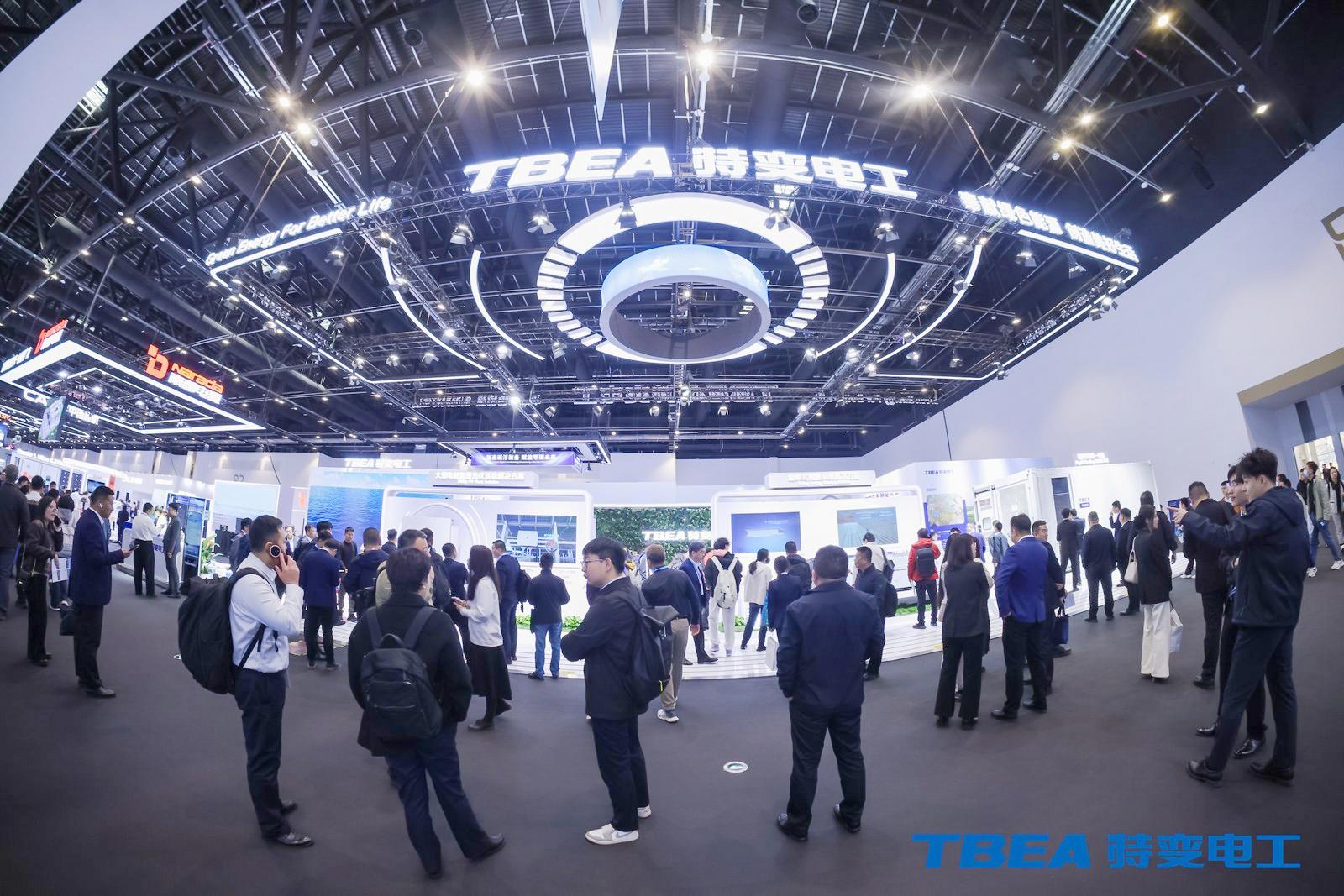
On April 1, the 14th Energy Storage International Summit and Exhibition (ESIE 2026) was reopened at the Beijing Capital International Convention and Exhibition Center. At this event, TBEA New Energy Company launched two key new products that define the next generation of standards:. The overall exhibit, anchored by two new products, showcased a comprehensive and synergistic smart energy ecosystem. This move not only underscores the company’s deep-rooted expertise and pioneering breakthroughs in core power electronics technologies, but also signals that its integrated “photovoltaic plus energy storage” strategy has entered a new phase characterized by “ultra-high power density, end-to-end intelligence, and proactive grid support.” At the same event, the company also showcased a comprehensive portfolio of solutions spanning the power generation, grid, and end-user segments, fully demonstrating its technological capabilities and ecosystem strategy in supporting the global transition to a new type of power system.
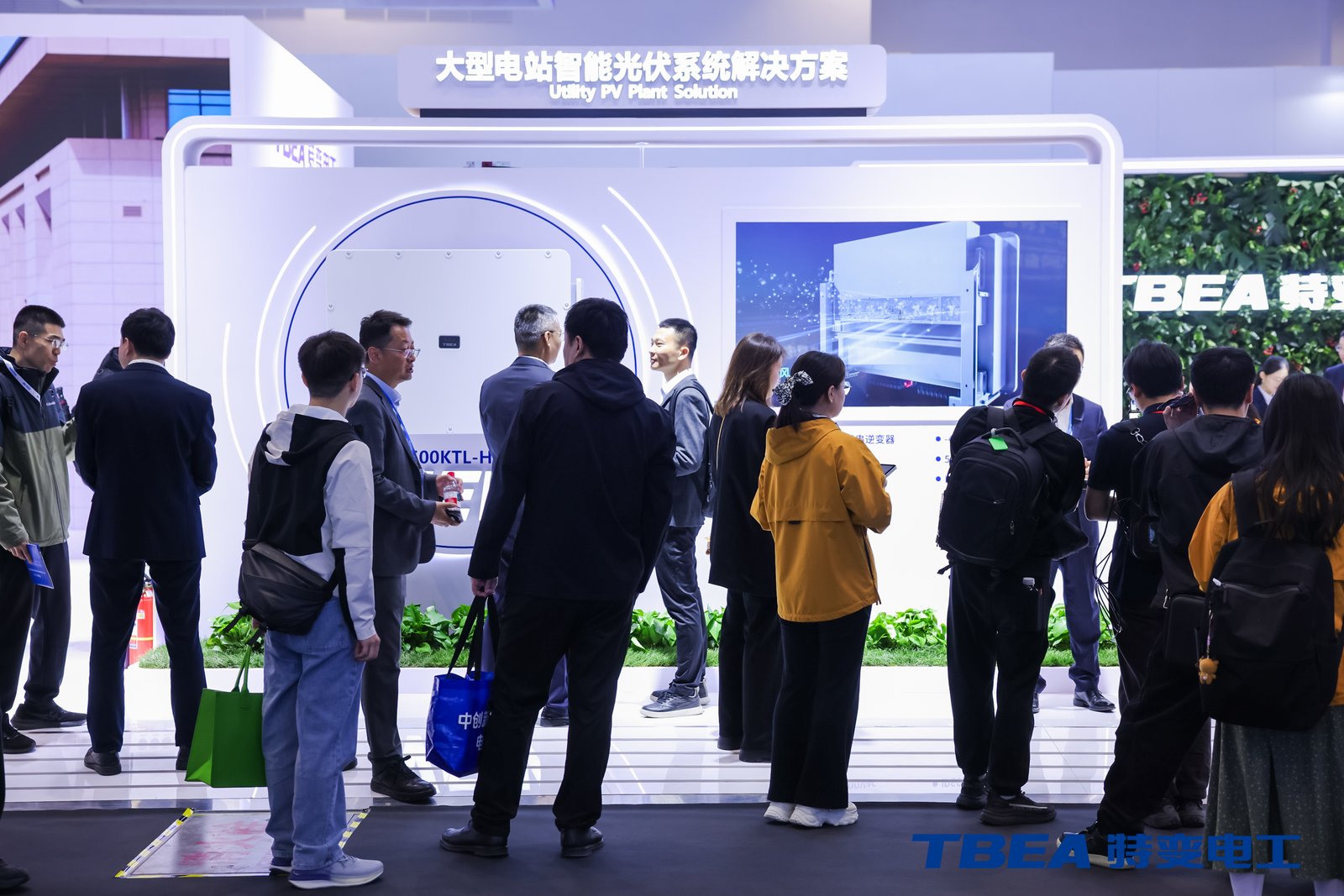
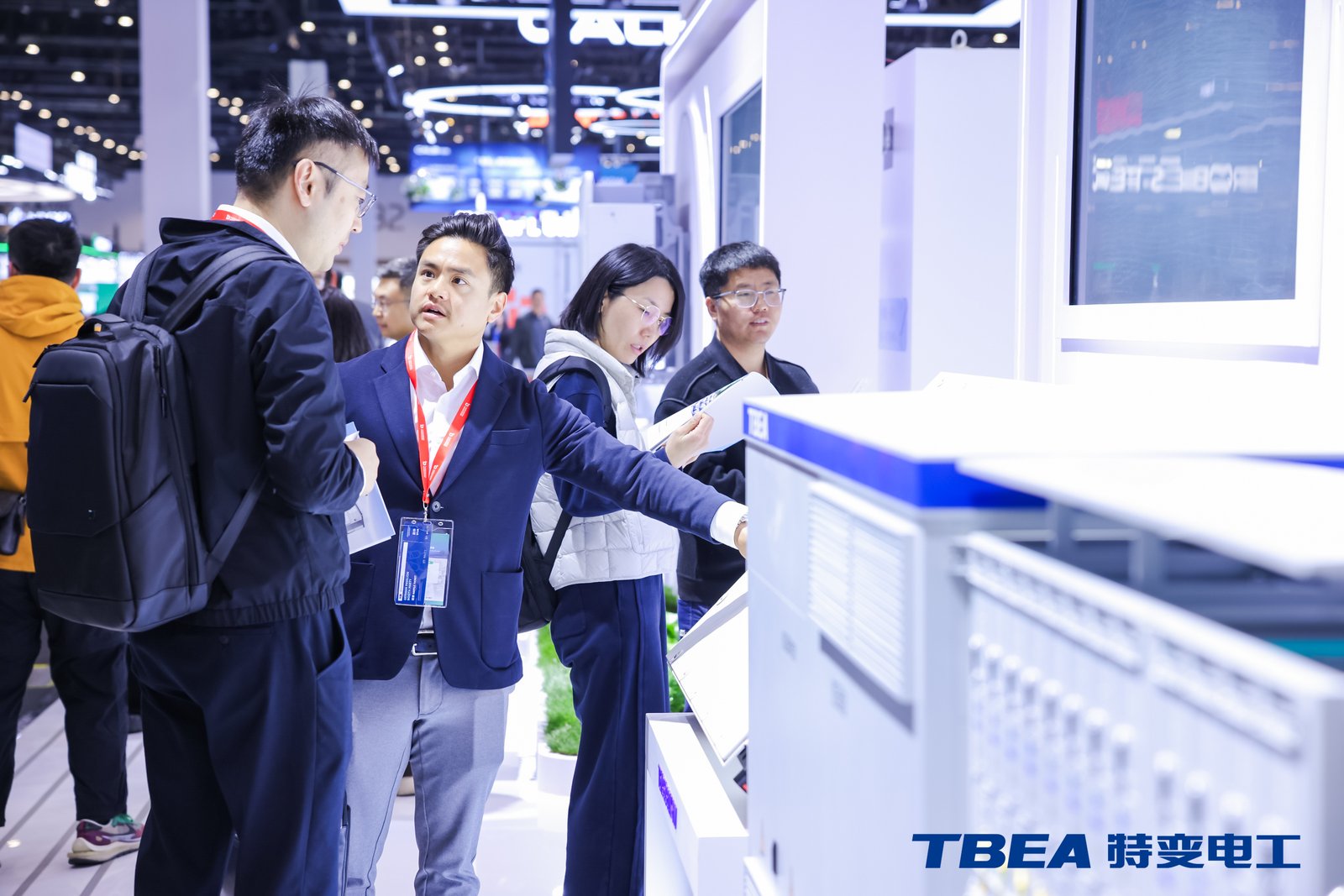
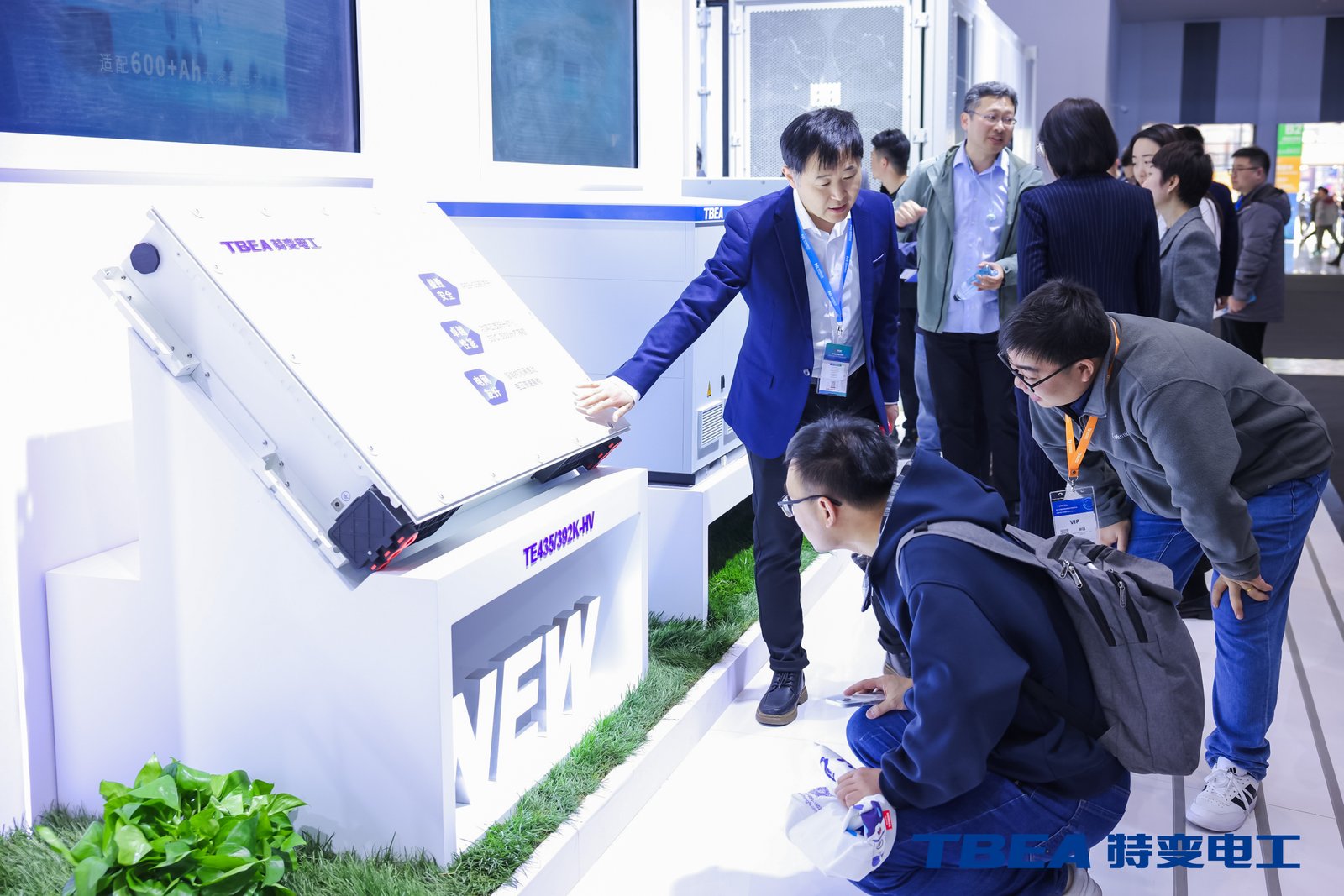
the two new products released during this exhibition are respectively aimed at the core power conversion links of energy storage system and photovoltaic power generation, it can be regarded as the” heart “and” engine “of the new energy system”. Their synchronized upgrade is aimed at systematically addressing the industry’s core challenges, including high-density deployment, grid-friendly interaction, and lifecycle-cost reduction.
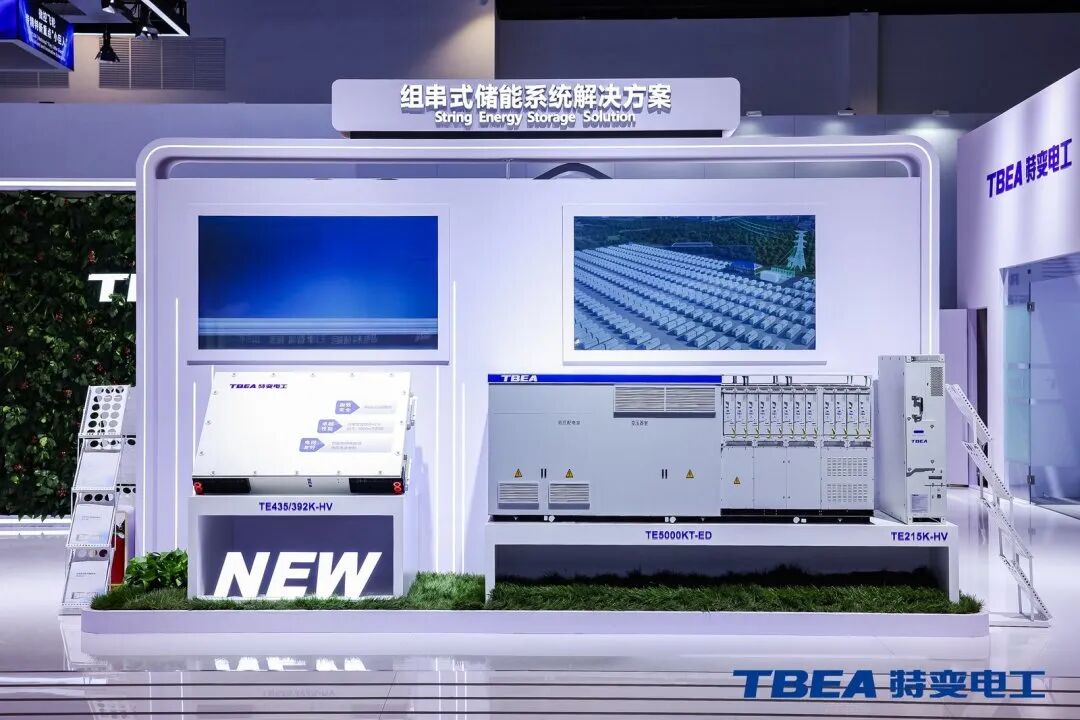
This product is a complete reconstruction of the converter (PCS), the core of the energy storage system by TBEA New Energy. . Through innovative topology and thermal management, the new design achieves a smaller footprint and lighter weight at the same power rating. Compared with the previous generation, both volumetric power density and gravimetric power density have been significantly improved. This significantly reduces the land footprint of energy storage power stations, making it particularly suitable for projects in areas with limited land resources or for retrofits and upgrades, thereby directly lowering both initial capital expenditure and land costs. TE435/392K-HV goes beyond mere physical compactness; it is more like a smart “heart” equipped with independent thinking and self-supporting capabilities. When paired with a high-speed control platform, it gains grid-forming capabilities and can seamlessly switch between grid-forming and grid-following modes within milliseconds. This means that it can not only adapt to a wide range of grid conditions, from extremely strong to extremely weak, but also proactively provide critical ancillary services such as inertia support, fast frequency regulation, and black-start capability. As a result, it transitions from being a mere “power transporter” to an “active participant” in maintaining grid stability. By combining a high protection rating with multiple proactive safety features, the device achieves extreme compactness while maintaining ultra-high reliability in a wide range of harsh environments.
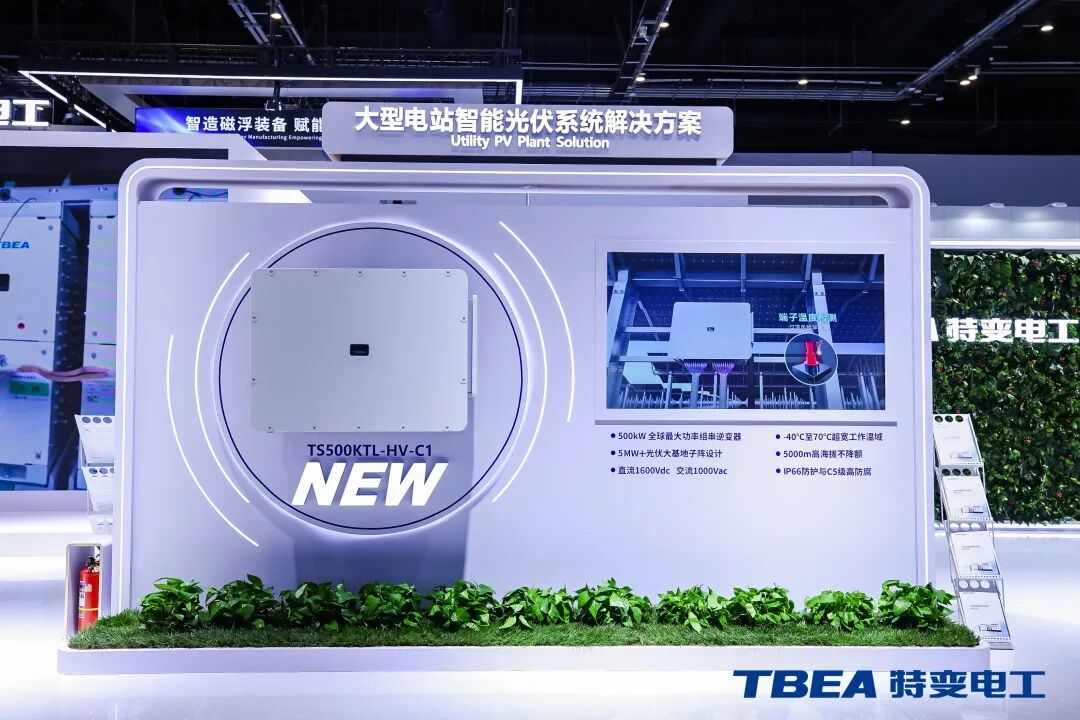
On the PV side, TBEA New Energy has pushed the stand-alone power of the string inverter to a new global height of . The product is tailored for subarray designs in 5/5.5MW utility-scale PV plants. By supporting higher voltage platforms—1600 V DC and 1000V AC—it effectively reduces system line losses and balance-of-system (BoS) costs. Compared with mainstream 330kW solutions, it is expected to deliver substantial initial capital savings for the power plant.
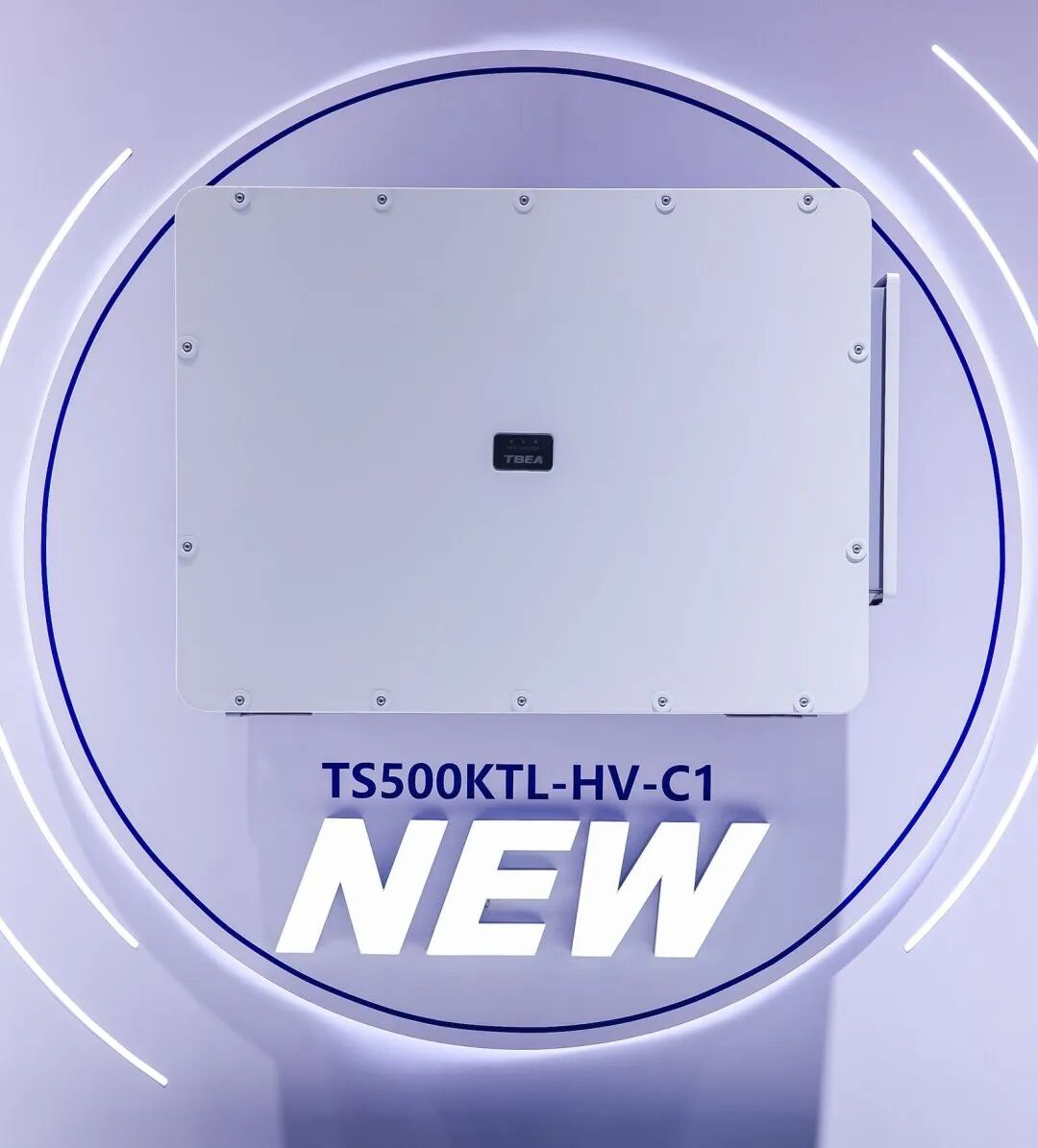
“This product is better suited to weak-grid environments and offers higher power-generation efficiency.” . The power core of the “engine” employs third-generation silicon carbide semiconductor devices, which not only improve conversion efficiency but also enhance power density and reliability. The product has , showing unparalleled environmental adaptability. In terms of power grid access, it adopts voltage source control technology, has the ability to actively support the voltage and frequency of the power grid, and the power response time is as fast as , which greatly improves the response speed and support strength of photovoltaic power station to power grid dispatching instructions, and helps the power grid stability under the high proportion of new energy access.
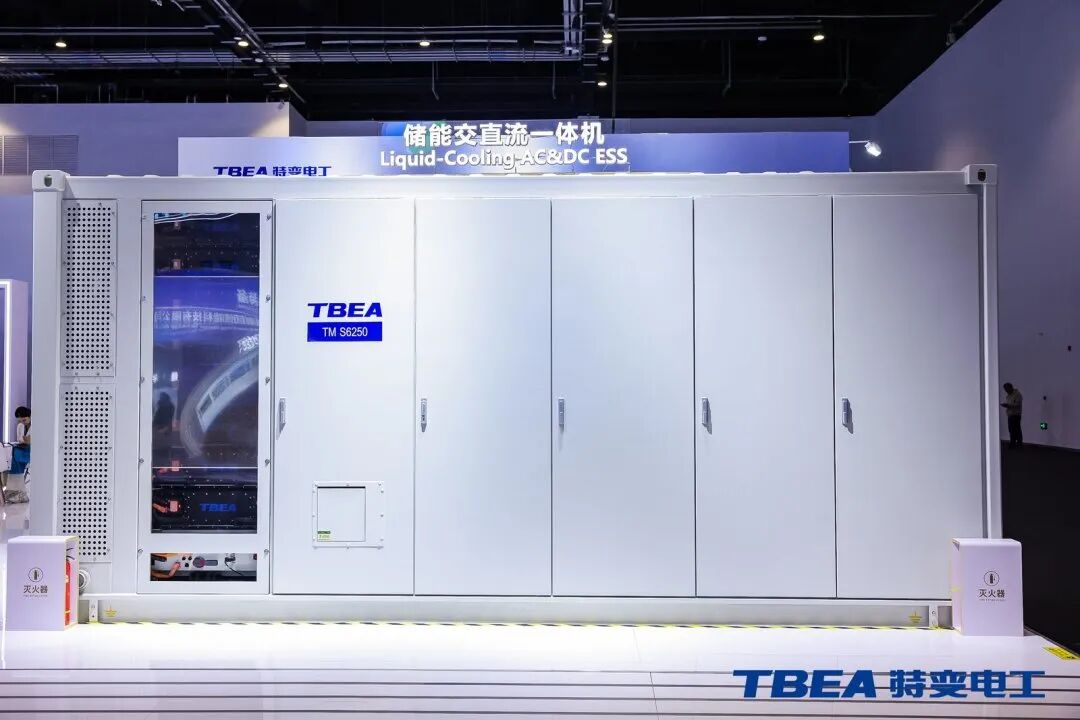
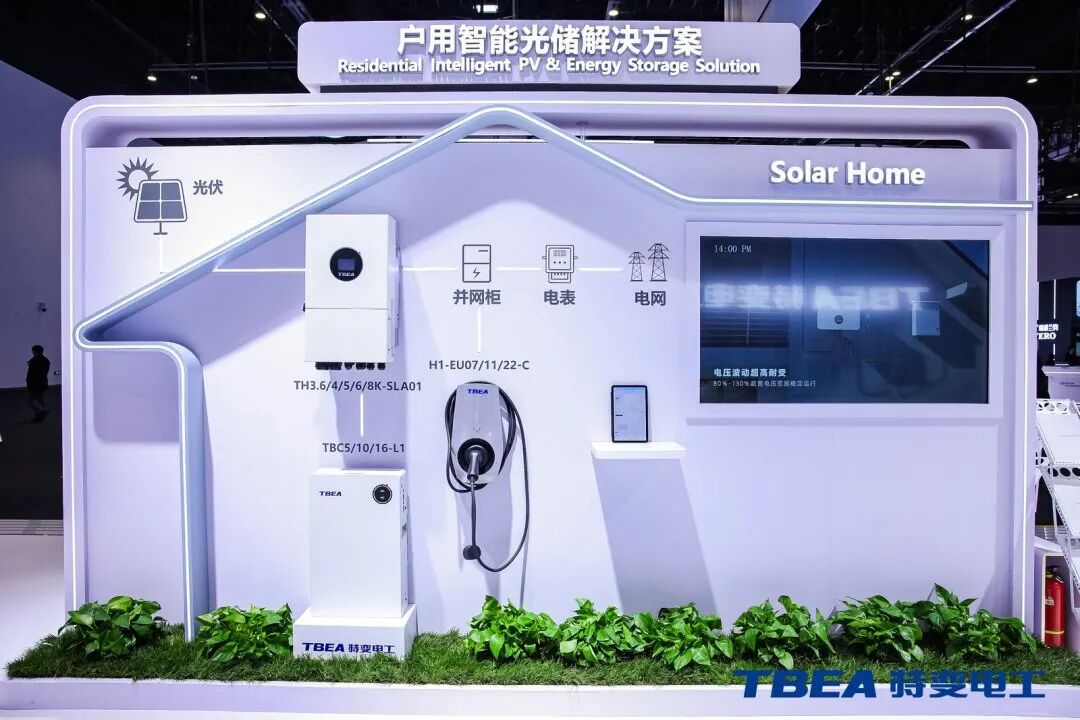
TBEA New Energy This exhibition showcases a complete and collaborative smart energy ecosystem. At the exhibition booth, BPS’s integrated AC/DC energy storage system showcased the optimal engineering solution for both customer-side and grid-side applications, thanks to its modular prefabrication, space-saving design, and rapid deployment capabilities. String-level integrated inverter-boost converters, leveraging “massive-scale cluster control technology,” enable millisecond-level unified response across the entire energy storage power station, thereby enhancing overall efficiency. In response to the booming distributed energy market, the company also unveiled a new integrated solar-plus-storage solution tailored for diverse applications, including residential, commercial & industrial, and microgrid scenarios. This solution maximizes on-site renewable energy self-consumption and enables intelligent energy dispatch.
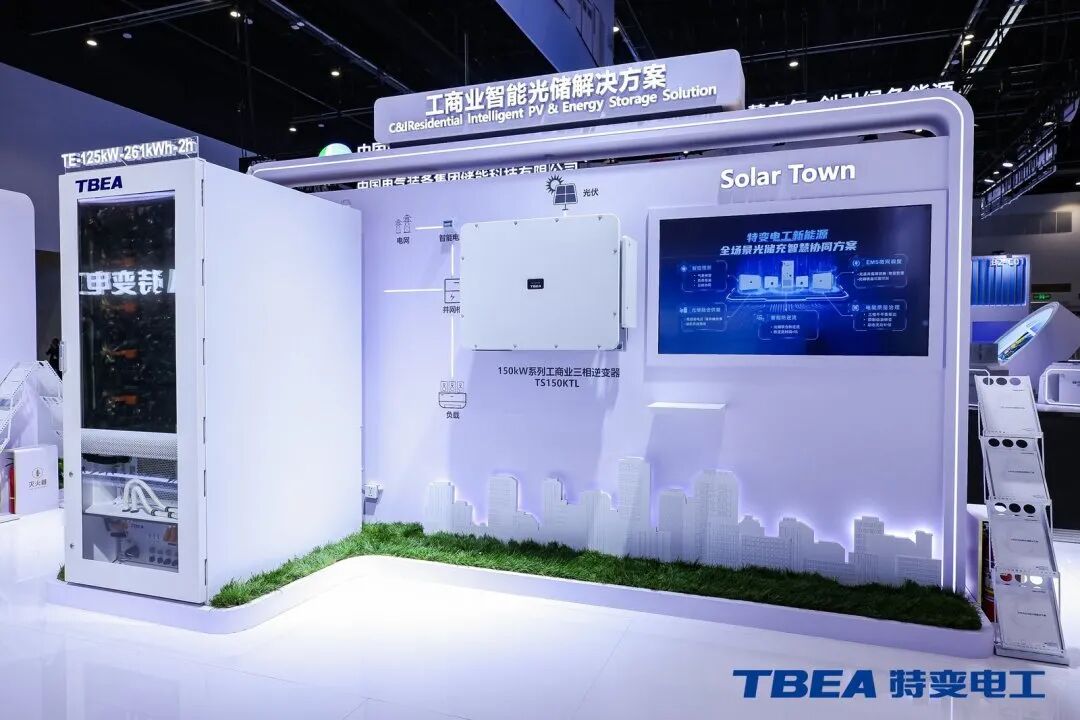
Driven by the “dual carbon” goals, the transition to green electricity has become a central issue in both the residential and commercial/industrial sectors. To meet diversified, scenario-based smart energy needs, TBEA New Energy unveiled its new distributed solar-plus-storage integrated system solution at this year’s exhibition. This solution is not a mere aggregation of photovoltaic systems, energy storage units, and monitoring equipment. Instead, it centers on “efficient synergy and intelligent management,” achieving deep integration of these three key modules to create a self-optimizing, intelligently scheduled integrated “source-grid-load-storage” microenergy network. The solution features rapid on- and off-grid switching, off-grid operation, and black-start capability, allowing it to flexibly transition between operating modes based on varying application requirements. Its product portfolio provides comprehensive, precise coverage: ranging from 8–150 kW distributed PV inverters and 5–15 kW residential solar-plus-storage hybrid inverters to modular commercial and industrial energy storage systems with a minimum configuration of 125 kW/261 kWh, thereby establishing a complete power-range lineup. This makes the solution suitable for both residential villa customers who prioritize energy conservation, backup power, and green electricity, as well as for commercial buildings, industrial parks, and EV charging stations—commercial and industrial settings with stringent requirements for energy cost management and power supply reliability. Moreover, it can address the core pain points of high-energy-consuming industries such as steel and chemical manufacturing, including demand charge management, peak-valley arbitrage, and emergency power assurance, by providing tailored, one-stop solutions.
In the future, TBEA New Energy will continue to cultivate the technology of “optical storage integration”. Focusing on the core values of high efficiency, safety, intelligence and reliability, TBEA New Energy will provide global customers with solutions covering the whole life cycle of the project and adapting to the whole application scenario, and work together with partners to promote the clean and low-carbon transformation of energy, we will continue to contribute to addressing the challenges of global climate change.