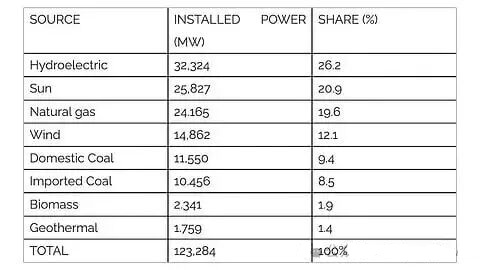
According to the latest data released by Türkiye’s Ministry of Energy and Natural Resources, as of the end of January 2026, the country’s cumulative installed solar photovoltaic capacity reached 25.83 GW, accounting for 20.9% of the national power mix. Energy Minister Alparslan Bayraktar described this growth in renewables as a “silent revolution” and reiterated the target of reaching a total installed capacity of 120 GW from wind and solar by 2035.
Data indicates that Türkiye’s total installed power capacity stands at 123.28 GW, of which 77.1 GW (62.5%) comes from renewable sources. The combined installed capacity of wind and solar has already exceeded 40 GW (reaching 40.68 GW by the end of January).
To achieve the 2035 target, Türkiye plans to add 8 GW to 10 GW of wind and solar capacity annually. The flagship “Renewable Energy Resource Zones” (YEKA) auction mechanism serves as the primary driver, with the government planning to tender at least 2 GW annually through this program.
Minister Bayraktar also highlighted a major cooperation achieved through an intergovernmental agreement: Saudi Arabia’s ACWA Power will construct 5 GW of wind and solar power plants in Türkiye. Among these, the first phase consists of 2 GW of solar PV projects located in the Sivas and Karaman Taşeli regions, planned to commence commercial operations in early 2028.
These two solar projects not only require a minimum local content ratio of 50% but have also set record-low electricity prices in Türkiye. Minister Bayraktar announced: “The electricity sales price for the Sivas project has been agreed upon at €0.0235/kWh, while in Karaman Taşeli, we will purchase electricity at a fixed price of €0.0199/kWh – the lowest price ever achieved in Türkiye.” Both projects will supply power at these fixed prices for 25 years.
Furthermore, Türkiye continues to promote the development of self-consumption projects. In January of this year, the government announced the allocation of 3,500 MW of capacity for self-consumption, prioritizing public institutions and strategic sectors capable of self-generation.