In Europe, electricity prices are not a simple number, but a complex system of market transactions, competitive packages and multiple taxes, with a set of sophisticated logic hidden behind it. This article will dismantle the complete chain of European electricity prices step by step, from how electricity is priced, how users choose, to how the final bill is formed.
Where does electricity price come from?
European electricity spot market mechanism
The starting point of European electricity price is the electricity spot market. Unlike ordinary commodities, electricity is difficult to store on a large scale and must always maintain a balance between supply and demand. As a result, Europe has adopted a market-based bidding mechanism to determine the real-time price of electricity.
The core of this mechanism is the “day before market”. Every day, power generation companies will report “how much electricity they can generate per hour tomorrow and at what price they are willing to sell”, while power retailers and large users will report “how much electricity they need and how much they are willing to pay”. Subsequently, the trading platform matches supply and demand through algorithms to form a unified market clearing price. This price is the reference benchmark for most electricity transactions the next day.
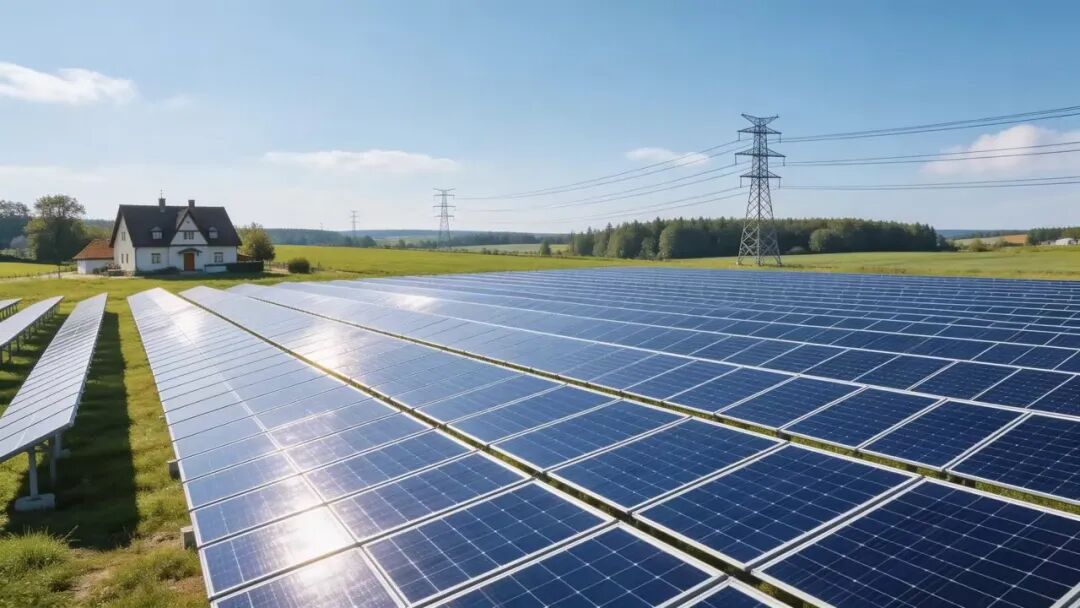
for example: if the most expensive power plant to be called is a natural gas power plant at a cost of 80 euros/MWh in a small period of time, then all power plants (including lower-cost wind power and nuclear power) will get the same price of 80 euros in that hour. This is the “marginal pricing” principle.
Of course, due to the volatility of new energy sources such as wind power and photovoltaics, market forecasts are often biased a few days ago. To this end, Europe has also established an “intraday market” that allows participants to continue trading and correct supply and demand deviations within hours or even minutes before the actual delivery of electricity.
There is more than one type of electricity price
Users face the “electricity price package”
In Europe, users do not directly face the spot price, but choose different types of electricity prices through electricity suppliers.
Fixed electricity price
No matter how the market fluctuates, the price per kilowatt-hour of electricity for users remains the same for a period of time (usually one year). The advantage of this model is that it is stable and predictable, and users don’t have to worry about a sudden surge in bills, but they can’t enjoy the market dividends of low-cost periods.
time-of-use tariffs
The supplier divides the day into multiple periods, such as low prices at night and high prices during the day. This design encourages users to move high-power appliances such as dishwashers and washing machines to night operation, thus helping the power grid to cut peaks and fill valleys. For ordinary families with regular work and rest, this is a cost-effective choice.
Dynamic electricity price
This kind of package directly links the user’s electricity price to the hourly price in the spot market-the electricity price may drop to negative value at a certain hour, or it may soar several times when supply and demand are tight. Dynamic electricity prices are suitable for users with smart electrical equipment or household energy storage. They can automatically charge when the electricity price is low and discharge for their own use when the price is high, so as to realize the optimization of electricity charges.
step electricity price/demand electricity price
the higher the electricity consumption, the higher the unit price, and the purpose is to guide energy conservation. However, industrial and commercial users often have to face “demand electricity price”, that is, in addition to paying according to electricity consumption, they also have to pay according to the maximum instantaneous power that occurs in the current month.
Electricity can not only be bought but also sold
The “two-way nature” of electricity prices
In Europe, users are no longer just consumers, but can also become producers. The most common scenario is rooftop photovoltaics. When the sun is full during the day, the power generation of the household photovoltaic system may exceed its own demand, and the excess electricity can be sold to the grid for income. In some countries, this feed-in tariff is a fixed subsidized price; in others, it is settled directly at the spot market price. Further, if the family is equipped with energy storage batteries at the same time, it can be discharged and sold to the grid when the electricity price is high, and charged from the grid when the electricity price is low, and profit from the price difference.
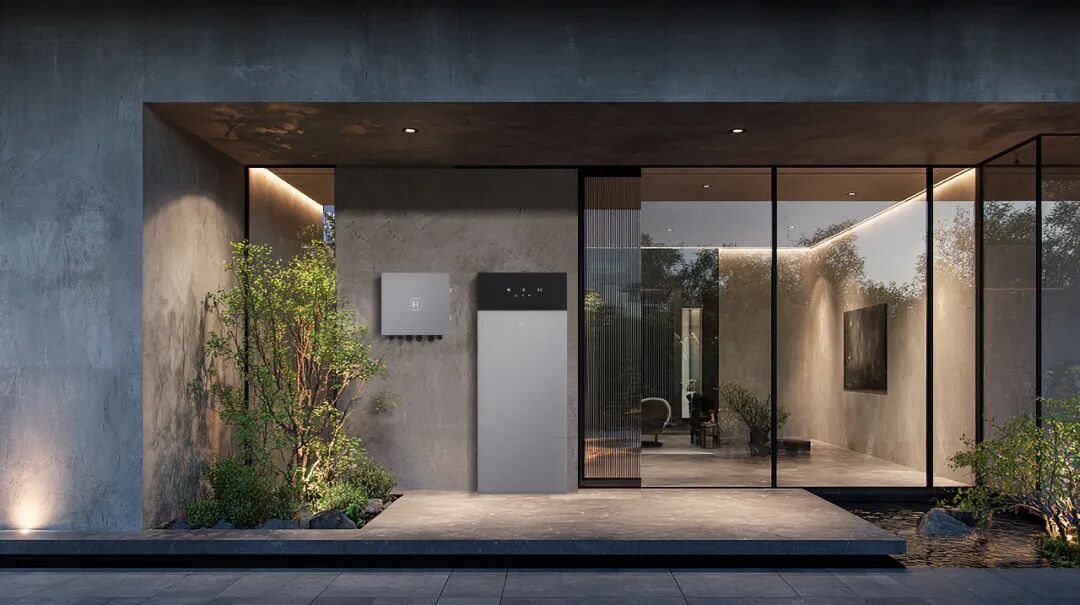
This” producer-consumer “model is changing Europe’s electricity ecology. More and more households, farms and small businesses are reducing their annual electricity bills to zero or even negative through a combination of photovoltaic and energy storage. The emergence of virtual power plant technology has allowed thousands of scattered small users to aggregate and participate in wholesale market transactions like a large power plant, providing auxiliary services such as frequency modulation and backup and receiving additional compensation.
This mechanism
is driving the energy storage explosion
After understanding the complete logic of European electricity prices, it is not difficult to understand why energy storage is becoming the “standard” for households and enterprises “. The value of the energy storage system is essentially the electricity price difference in the management time dimension. It can be charged at night or noon when there is excess photovoltaic and electricity prices are extremely low, and discharged for its own use or sold to the grid when peak electricity prices soar in the morning and evening. If combined with the dynamic electricity price package, the annual income of the energy storage system can be considerable.
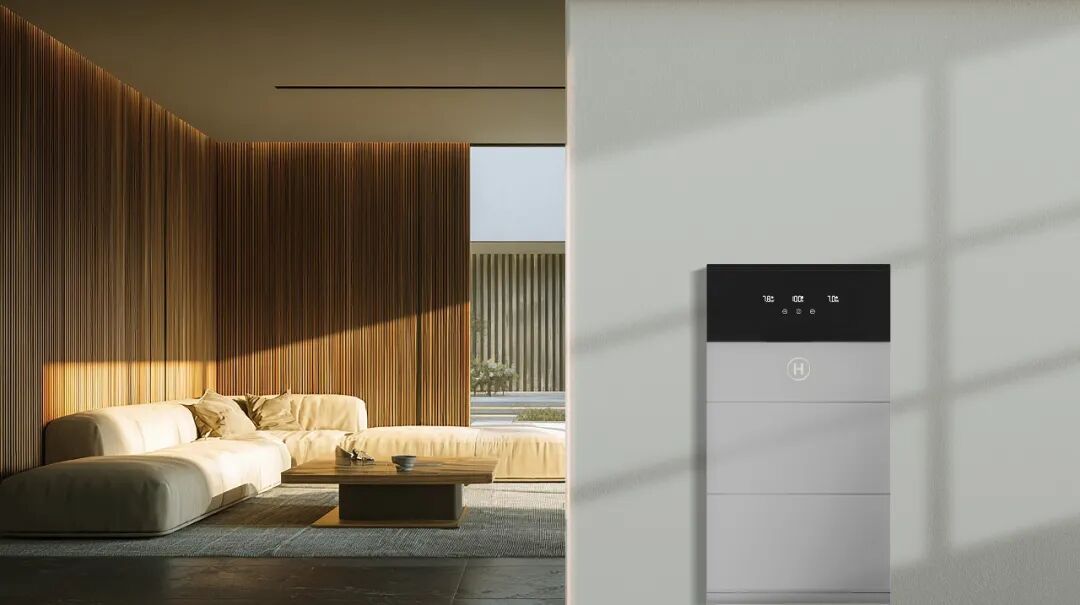
In this context, the home energy system is undergoing a critical transition from” available “to” optimal. However, traditional rules and manual settings alone have been difficult to meet this challenge.
This is exactly the scenario where the smart energy storage system exerts its core value. Taking the AI mode of the HiOne household storage all-in-one machine as an example, the system integrates dynamic electricity price, weather forecast and user’s electricity consumption habits at the same time, and automatically generates the global optimal scheduling strategy with the goal of maximizing revenue. All decisions are made in the cloud, with no additional hardware deployment required. More importantly, the system has the ability of continuous self-learning and evolution, so that energy management can be upgraded from “human setting” to “system automatic decision-making”, so as to truly realize the more intelligent and economical use. In the end, this system allows users not to worry about complex decisions, but to enjoy lower electricity bills and a more convenient electricity experience-smart, which should be so simple.