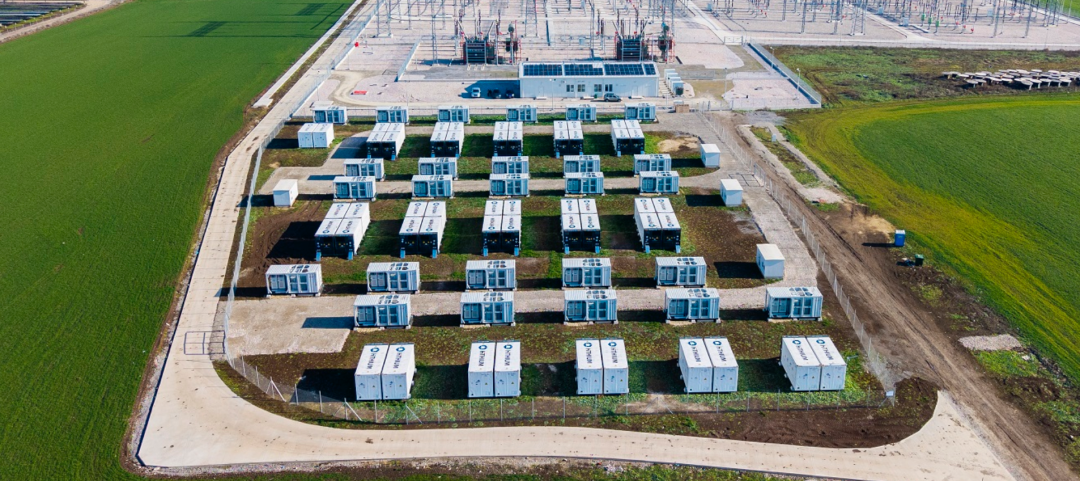
Recently, Vienna Investment Group Renalfa RPC, a joint venture company established with RGREEN INVEST, has given a new set of technical solutions through the acquisition and expansion of Horia-Arad projects in Romania .
The initial project includes a 365MWp photovoltaic power station and 400MW/800MWh independent energy storage. If it is only “photovoltaic energy storage”, it is actually nothing special, but these two projects are combined into a power cluster , and the scale will be larger.
dual chemical system: “structural hedging” of lithium-ion sodium electricity
according to the plan disclosed by RPC, the total energy storage scale of Horia-Arad cluster will reach 3.6 GWh after completing the two-stage expansion.
The core innovation lies in the use of dual chemical system (Hybrid Dual-chemistry).
The more critical point is the need for long-term energy storage . As the project’s energy storage ratio continues to lengthen (e. g., the first phase of 669MW/2000MWh, with storage duration approaching 3 hours), the cost and supply chain risks of a single battery system are emerging. The introduction of sodium power by RPC is also a utility-scale validation of the commercial viability of sodium power as a long-term energy storage supplement, redistributing the costs and risks of long-term energy storage . At the same time, this also for the future to avoid lithium resource price fluctuations, ahead of a layer of structural hedging.
introduction of mesh construction technology
in addition to the innovation of battery chemical system, the project side specially mentioned mesh construction inverter technology . For areas with large-scale access to renewable energy such as Arad County, Romania, the typical problems faced by the power grid are reduced moment of inertia and insufficient short-circuit capacity . Traditional grid-connected inverters are mostly “following the grid” and are essentially dependent on the power grid. The grid-type technology used in the project means that the inverter can independently establish voltage and frequency.
As project CEO Ivo Prokopiev said, the goal of this system is to become a “ sovereign grid anchor (Sovereign Grid Anchor)”. It can be understood that this is to enable new energy power stations to have the power grid support capability that only synchronous machines (thermal power) had in the past .
AI scheduling center: from “green power generation” to “base load sales”
RPC also plans to unify photovoltaic and this dual-chemical energy storage system through a set of self-developed AI scheduling platform. When there are fluctuating photovoltaics and multiple energy storage with different response characteristics in the system, without a unified scheduling hub, these capabilities are difficult to truly release.
The role of AI here is not simple optimization, but to predict electricity prices and load real-time coordination of multiple resources . The end goal is clear: to provide a green base load product (Green Baseload Products).
For a long time, the volatility of new energy has made it difficult to use it as a base load power. But through large-scale long-term energy storage, coupled with AI accurate forecasts of electricity prices and loads, RPC is trying to break down this barrier. If this model works, it will directly change the bargaining power of renewable energy in energy exchanges and industrial customers.
According to the plan, the project will be commercialized in 2027 . At that time, this system, which mixes multi-chemical system energy storage (lithium-sodium-electric) network technology AI intelligent scheduling , may provide the industry with a model blueprint for “the next generation of hybrid energy clusters.