Recently, the China Electric Power Enterprise Federation released a typical case of innovation and application in the electrochemical energy storage industry in 2025, aiming to further promote the safe and high-quality development of the industry, summarize, exchange and promote successful experiences and useful practices, and play a typical leading role. The case set of “ identification and health assessment technology and application of electric energy storage state characteristic parameters based on different climate conditions ” was selected by Beijing Xiqing Energy Technology Co., Ltd. .
Battery energy storage system based on different climatic conditions
State characteristic parameter identification and health assessment technology and application
Introduction to 1. typical cases
Energy density of lithium batteries used in electrochemical energy storage higher, there are strong internal explosive conditions. This has led to an endless stream of electrochemical energy storage safety accidents, and the safety of electrochemical energy storage has become a common industry pain point that the world needs to face. According to incomplete statistics, in the past 10 years, there have been dozens of fire and explosion accidents of lithium battery energy storage power stations in the world. The safety of battery energy storage system has become the primary problem of large-scale application of lithium battery energy storage power stations and the bottleneck of further promotion.
This case takes the operating environment of an energy storage power station in a 100MW agricultural-optical complementary power generation project as the background, systematically studies the key technologies for the healthy operation of the energy storage system in harsh environments such as high (low) temperature, high humidity and high salt spray, and makes an in-depth analysis of the state characteristic parameter identification and health assessment of the battery energy storage system. The climate environment has a significant impact on the performance and life of energy storage batteries, and targeted research and technology development are carried out for different environmental conditions to achieve the smooth operation of energy storage power stations. In view of the influence of climate environment on the battery life and performance, the operation maintenance and fault prevention scheme to adapt to different temperature and humidity, high salt spray and other environmental conditions is proposed, which provides reliable technical support for the energy storage system under harsh conditions. An innovative framework based on the combination of physical model and data-driven method is proposed, combined with characteristic parameter identification strategy and diagnostic model, and the operation characteristics and early health management technology of energy storage system are systematically studied.
The following results have been achieved in this case:
1. The adaptability problems of energy storage system in harsh environment such as high temperature, low temperature, high humidity, high salt spray and high altitude are analyzed in detail. High temperature accelerates the chemical reaction of the battery, increasing the risk of thermal runaway, low temperature reduces the reaction rate, easy to cause the formation of lithium metal dendrites to cause short circuit, high humidity leads to metal corrosion, salt spray accelerates the aging of equipment, high altitude, low pressure and low temperature affect heat dissipation and chemical stability. The direction of improvement includes battery material innovation (solid-state batteries, lithium-sulfur batteries), thermal management optimization (liquid cooling, intelligent temperature control), technological breakthroughs in anti-corrosion coatings, and intelligent monitoring and early warning systems based on the Internet of Things and big data.
2. In-depth study of battery fault detection and diagnosis technology and state characteristic parameter identification strategy. The fault mode, mechanism and influence of lithium battery are analyzed, and the early fault characteristics are extracted. Through the hybrid modeling of physical and mathematical models, the multi-dimensional health characteristics such as internal resistance, open circuit voltage curve characteristics, residual capacity and module inconsistency are extracted from the operating data of multiple working conditions, and a fault detection and diagnosis system based on multiple data fusion is constructed to realize accurate fault location and online health status assessment. Combined with the environment of Hainan Danzhou power station, the electrochemical energy storage diagnostic model is proposed, and the state parameter identification and health assessment system under different climate conditions are optimized by data fusion and ML to support early warning and efficient management.
3. Around the health status assessment of lithium-ion batteries, the advantages and disadvantages of physical models (such as equivalent circuit models) and mathematical models (such as Gaussian regression and LSTM) are systematically discussed: physical models can intuitively reflect dynamic characteristics but modeling is complex and has poor real-time performance; Mathematical models are good at nonlinear prediction but lack physical mechanism description. Combined with the high temperature and high humidity environment where the case power station is located, a comprehensive evaluation method combining physics and mathematics is innovatively proposed: fusing the second-order RC equivalent circuit model and SDAE-BP-ECA neural network framework, optimizing data input through stacked noise reduction autoencoder (SDAE), BP neural network capturing nonlinear relationship, ECA attention mechanism improving accuracy, realizing efficient health state estimation, and having both scientific physical mechanism and data-driven advantages.
4. Based on the relevant research results, two papers and two invention patents have been formed, and a characteristic parameter identification and health assessment system based on the state of electric energy storage under different climatic conditions has been established. Related technologies have been applied in electrochemical energy storage stations in Zhejiang, Jiangsu, Ningxia, Henan and other places.
2. solutions
System analysis of its impact on the reliable operation of energy storage devices. To study the effects of high temperature, low temperature, humidity and salt spray environment on the state of charge, charge and discharge efficiency of single battery, and then to explore the influence of high and low temperature on the inconsistency of energy storage system. To study the performance deterioration law and thermal runaway phenomenon of single battery at high temperature, as well as the safe and reliable charging of energy storage system at low temperature; To study the influence of high humidity environment on the stability of energy storage electrical system; to study the corrosion of high salt spray on the battery compartment and external accessories of the energy storage system, to study the applicability and performance of various energy storage technologies in different environments, and to evaluate their charge and discharge efficiency, cycle life, safety and other indicators.
Combined with the study of battery mechanism, using the method of hybrid modeling of physical model and data model, on the basis of different environmental data, the multi-dimensional characteristics that can reflect the battery health state are extracted from the large data of energy storage power station operation, and the online evaluation algorithm of energy storage power station health state suitable for complex operating conditions is proposed. According to the characteristics of climate environment, the correlation between the external characteristic parameters of lithium battery and the internal fault mechanism, the threshold setting method of fault diagnosis parameters adapted to the difference of battery is studied. The quantitative health risk assessment model of energy storage battery applied to the whole station is constructed, and the health status assessment system of energy storage power station based on climate environment is developed on the basis of the formation of the algorithm model.
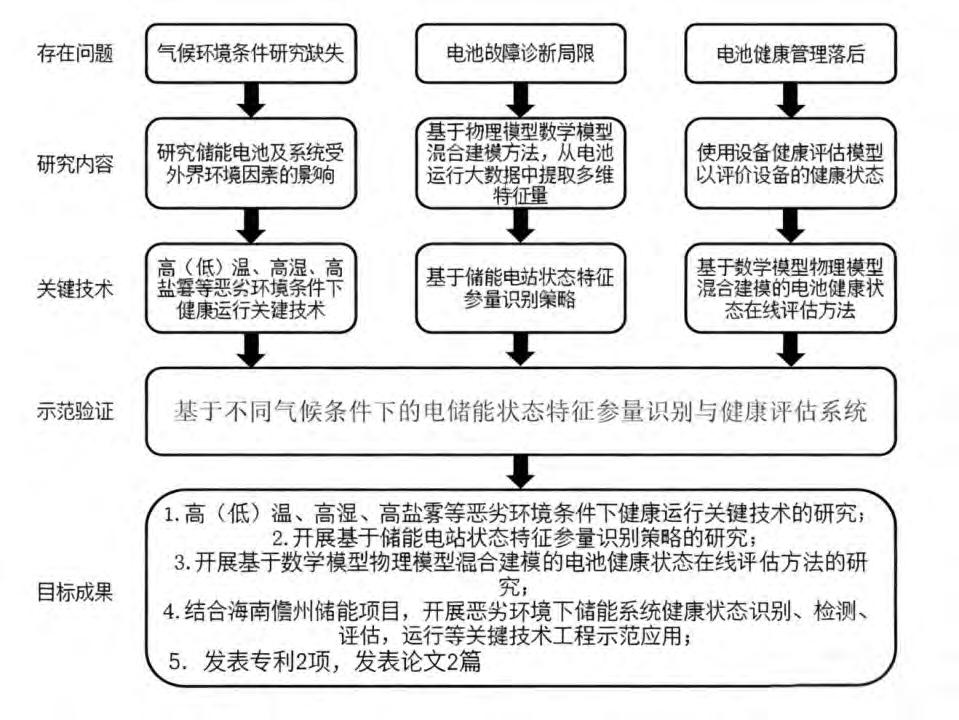
figure 2-1 technical roadmap
3. key points and innovation points
1. key technologies for healthy operation of energy storage system under severe weather conditions
the safety of energy storage battery and system is affected by external environmental factors, high temperature will accelerate the internal chemical reaction of the battery, increase the internal pressure and evaporation rate. Low temperature will slow down the internal reaction rate of the battery, reduce the performance of the battery, and even cause the battery to fail. In extreme cases, the battery at low temperature may not be able to output enough power. The high humidity environment may cause corrosion of the battery case and internal metal components, which in turn affects the structural stability and safety of the battery. An excessively dry environment may cause the loss of the internal electrolyte of the battery, making the internal electrolyte concentration of the battery too high, thereby affecting the performance of the battery, which may cause the capacity of the battery to drop, the voltage is unstable, and the reliability and service life of the battery are reduced. Salts in a high salt spray environment may cause corrosion of metal parts such as battery housings and connectors, thereby reducing battery life and performance. In the salt spray environment, the corrosion of metal parts will increase the internal resistance of the battery, reduce the discharge efficiency of the battery, and also increase the self-discharge rate of the battery. By studying the impact of harsh climate environmental conditions on the operation of electric energy storage, the use of targeted technology to achieve the healthy operation of multi-dimensional and all-round energy storage power station from battery mechanism, system integration to optimal operation under harsh environmental conditions is a key innovation technology in this case.
2. Battery state evaluation and characteristic parameter identification technology under complex working conditions
At present, most of the research on battery state evaluation and fault identification is based on laboratory data. However, energy storage power stations will face various complex working conditions during operation, most of the state assessment algorithms suitable for experimental data are not suitable for the complex working conditions of energy storage power station. In addition, there are many types of lithium batteries, and the characteristics of each category of lithium batteries are different. At the same time, the same type of lithium-ion batteries produced by each manufacturer are also different in materials such as electrolytes and solvents, and even the same manufacturer The same type of lithium batteries produced by the same manufacturer have inconsistencies in static characteristics and dynamic characteristics due to limitations such as preparation processes. It is a key innovative technology in this study to evaluate the state of large-scale battery system by using the method of big data analysis and mining based on battery field operation, and to improve the generalization ability of lithium battery state evaluation model under complex climate conditions.
3. Intelligent diagnosis and health assessment technology for battery failure under incomplete sample conditions
The failure paths of energy storage batteries are complex and diverse, and depend on complex and random operating conditions, while the relevant battery failure data have small sample, incomplete and cross-data domain characteristics, it is difficult to obtain a battery failure diagnosis model with high generalization ability by using traditional artificial intelligence methods. Therefore, under the condition of scarce failure label data, it is another key innovation technology to establish the internal relationship between battery characteristic parameters and various failure behaviors, to construct a battery failure diagnosis model with online meta-learning ability by fusing multi-source domain knowledge, and to construct an energy storage battery health status assessment model based on failure consequence probability deduction.
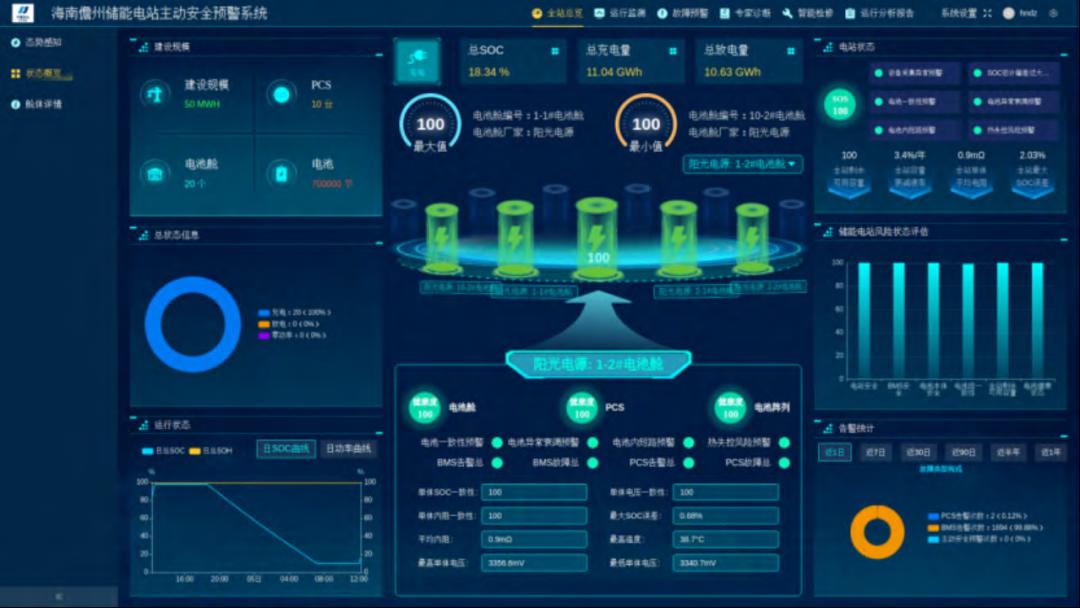
fig. 3-1 energy storage power station health status assessment system
4. actual results
the results of this case mainly include the establishment of model methods, the construction of energy storage system status detection and health assessment system, papers, patents and engineering demonstration applications. the specific results are as follows:
1. Key technologies for healthy operation of energy storage system under harsh environmental conditions such as high (low) temperature, high humidity and high salt spray;
2. An online evaluation method of battery health status based on hybrid modeling of mathematical model and physical model is proposed;
3. An identification strategy based on state characteristic parameters of energy storage power station is proposed, form a set of energy storage system status detection and health assessment system;
4. Combined with energy storage projects, carry out demonstration applications of key technologies such as identification, detection, evaluation and operation of energy storage system health status in harsh environments;
5. Intellectual property rights: 2 patents and 2 papers.
5. economic benefits and promotion prospects
the project can improve the intelligent level of energy storage system operation and reduce the cost of operation and maintenance personnel by 250000 yuan/year (listed by one person); Fault identification and elimination in advance will improve the overall utilization efficiency of energy storage system and reduce the number of abnormal shutdown and maintenance, it is estimated that indirect economic benefits will be 200000 yuan/year (including auxiliary service benefits and reduction of assessment costs); through health assessment technology and optimized operation strategies under different environmental conditions, the attenuation of the energy storage system will be delayed, the battery cells will be reasonably called to avoid premature aging of the battery cells, and the replacement cost of the battery cells will be reduced by 30-400000 yuan/year.
The generalization potential of this technology stems from its universal architecture and cross-scenario compatibility. At the technical level, its modular design can flexibly adapt to diversified climatic environments: the system can automatically activate the pressurized heat dissipation compensation strategy for the decrease in heat dissipation efficiency caused by low air pressure in high altitude areas; In the face of desert arid environment, humidity monitoring and electrolyte loss early warning module are introduced. For high salt spray corrosion in industrial coastal areas, the dynamic measurement function of oxidation rate of metal components is strengthened. This adaptive mapping mechanism of “climate parameter-operation strategy” enables the technology to quickly migrate to energy storage scenarios with different geographical conditions without reconstructing the core algorithm.
6. intellectual property rights and achievement appraisal
4 intellectual property rights were formed. Among them, there are 2 papers and 2 invention patents. In addition, a state characteristic parameter identification and health assessment system based on different climatic conditions is established.
novelty search opinions:
project “research and application of identification and health assessment technology based on state characteristic parameters of electric energy storage under different climatic conditions” was reviewed by researchers of Zhejiang science and technology information, a national first-level novelty search unit. the opinions are as follows:(1) after comparative analysis, the study of energy storage system in harsh climate environment has been reported in the domestic literature, but not from the battery mechanism, system integration to optimize the operation of multi-dimensional research;(2) after comparative analysis, the battery state assessment and characteristic parameter identification research in the domestic literature has been reported, but not for complex climate environment. To sum up, the content of this study has not been described in the domestic literature.
Introduction to the 7. team
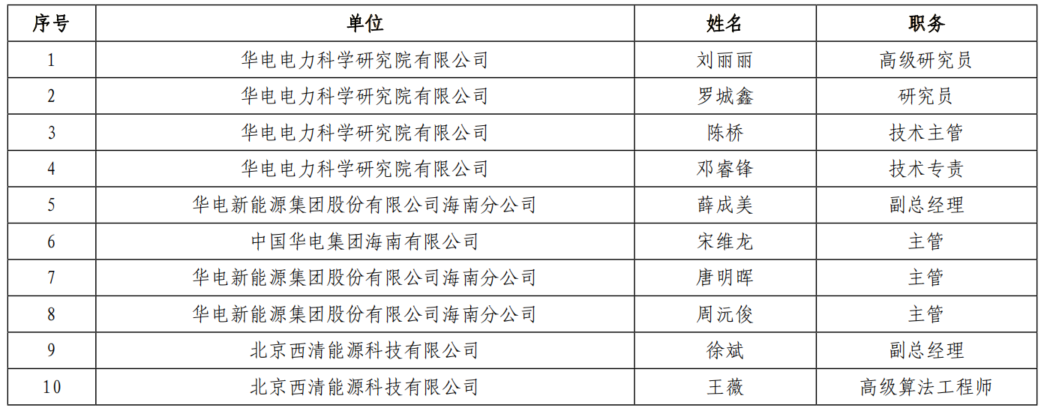
The team members include a senior researcher and a researcher of Huadian Group. The majors cover electrical, thermal, control, environment, machinery, chemistry, materials and other fields, it has strong ability in power system and energy storage technology, material corrosion protection and climate adaptability, design data analysis and intelligent algorithm development.