As of December 2025, the installed capacity of photovoltaic power generation in the country will reach 1.2 billion kilowatts, a year-on-year increase of 35%, and the photovoltaic industry will maintain a rapid development momentum. Behind the large-scale photovoltaic installation, the safety problem of power station has become a difficult problem that can not be ignored. In recent years, the frequent photovoltaic fire accidents not only caused a huge loss of assets, but also seriously threatened the life and production safety of the owners. The fire performance of photovoltaic modules has changed from an additional item of “icing on the cake” to a necessary option of “life and death.
facing the pain point of this industry, ABC component has chosen a way to return to its essence: it not only relies on flame retardant materials to realize “external fire control”, but also realizes “internal fire control” in technical structure, and creates “fire control tactic” for power station from the root “.
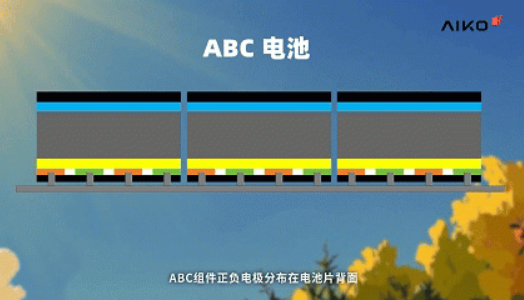
When we analyze the causes of photovoltaic fires, we will find that most of the hidden dangers do not come from the outside world, but from within the components. In the operation cycle of several decades, the components will inevitably encounter bird droppings, leaf cover or small cracks caused by installation and transportation. The positive and negative electrodes of traditional components are distributed on the positive and negative sides of the battery sheet. The current needs to pass through the battery sheet. After shielding, the battery sheet that does not generate electricity becomes a large resistance, changing from “power generation element” to “power consumption load”. The current can only pass through the leakage point, and the heat is concentrated to form a “hot spot effect”. The hot spot temperature can often reach 100-200 ℃, which is enough to ignite the back plate or adhesive film. This is the most hidden and difficult “internal cause” in photovoltaic fire safety “.
The core logic of the ABC component is that it achieves “endogenous safety”.
From “passive flame retardant” to “suppression of hot spots”, ABC components have a “high temperature suppression” function through the innovation of battery structure in the design stage.
compared with the traditional component design, the positive and negative electrodes of ABC component are distributed on the back of the battery sheet, and the current does not need to pass through the battery sheet. at the same time, the current can still pass through the bottom evenly after the component is blocked by the integrated bypass diode of the single battery, which is not easy to generate hot spots. At the same time, ABC components use copper interconnection technology with a single-sided welding process to effectively improve component reliability. With excellent crack resistance, ABC components can greatly reduce the risk of fire caused by cracks. This ability to extinguish the fire from the root is the most important factor in determining the fire performance of the component.
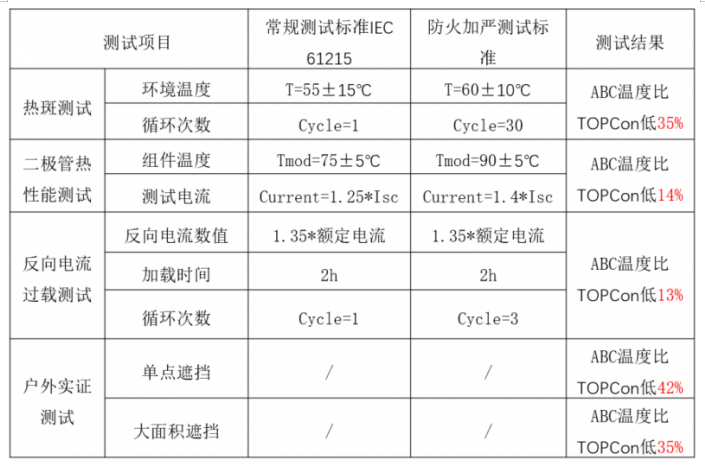
In view of the current situation that the fire test standard of photovoltaic industry is not perfect, Aixu started from the bottom line thinking of protecting the safety value of products, and jointly launched the industry-leading fire test with TÜV Rheinland, the in-depth “physical examination”
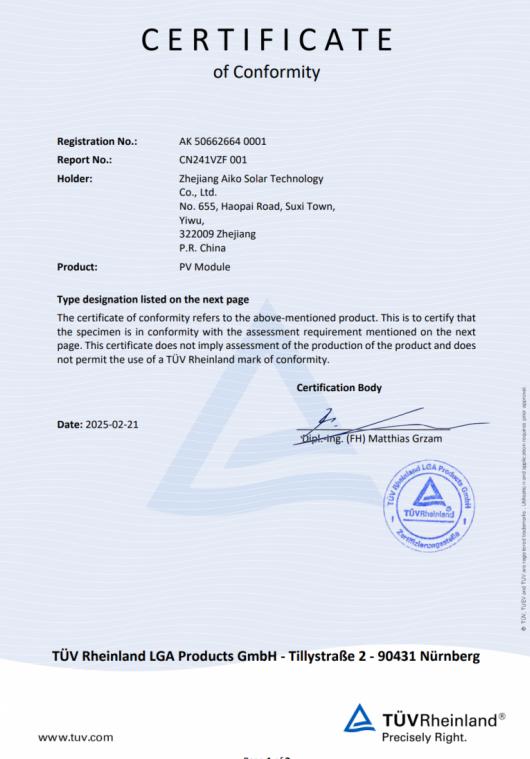
of the fire performance of the components under extreme working conditions has been carried out, and the certification of “component-level fire risk resistance” issued by TÜV Rheinland has been successfully obtained. The rigorous test proves that the working temperature of ABC components can always be controlled within the safety threshold under extreme blocking or overload conditions, which is far lower than the critical point where traditional components may induce fire, ensure that in any extreme operating environment can maintain a calm and calm.
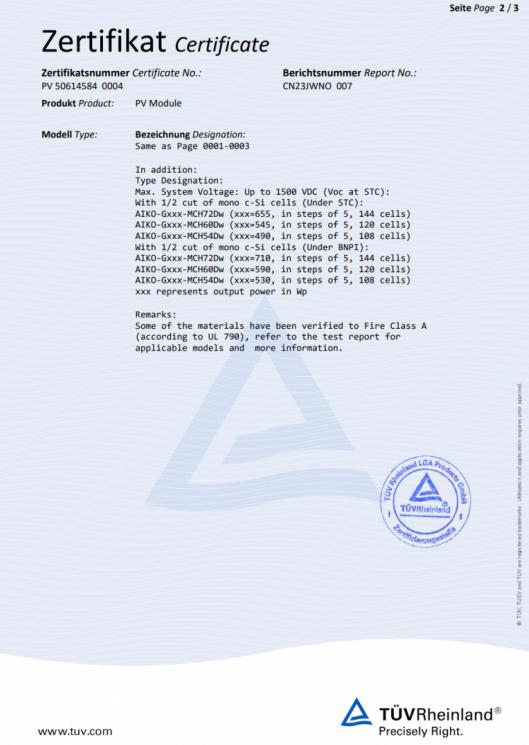
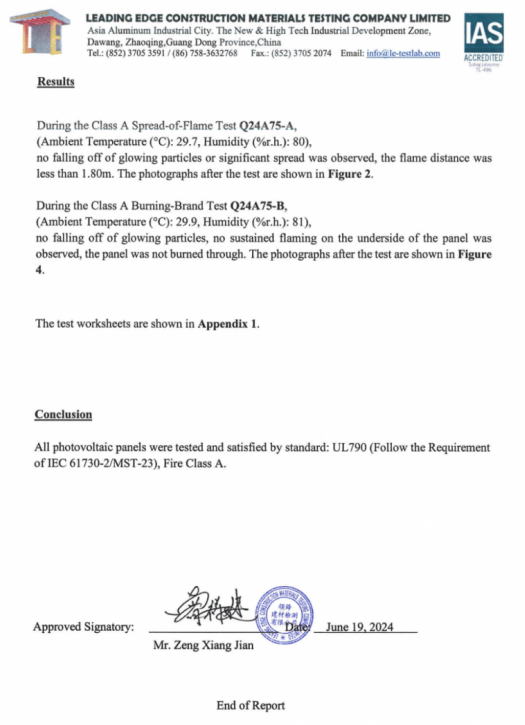
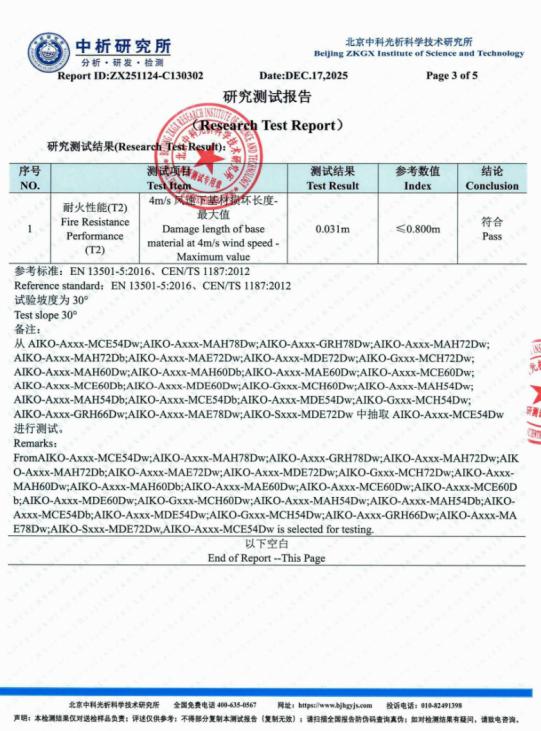
The component and its packaging system must act as a last-ditch fire protection barrier for external fire hazards, whether due to accidents caused by lightning strikes or the spread of fire in adjacent buildings. In addition to the strongest internal line of defense, the ABC component also builds a tight physical defense against the spread of fire when facing external extreme sources of fire. ABC components have fully obtained many international authoritative certifications such as IEC
61730 Class A, UL790 Type A, EN 13501-1 and EN 13501-5, fully verifying the fire protection reliability of the components. In the high temperature flame spread experiment up to 760±28°C, the spread distance is strictly controlled within 1.82 meters. Even in the face of a 30cm x 30cm fuel block test, ABC components can ensure safety and build a firewall from a single component to the overall roof system.
From “price competition” to “value competition” in the PV industry “of the present, fire safety is no longer just a compliance indicator, but a ballast stone for the continuous growth of the asset value of photovoltaic power plants throughout their life cycle. In the future, Aixu will continue to adhere to customer-centric, while pursuing extreme conversion efficiency, tailor-made differentiated solutions for global customers, escort customers’ core assets, and lead human society into zero with efficient and reliable ABC products. Carbon era.