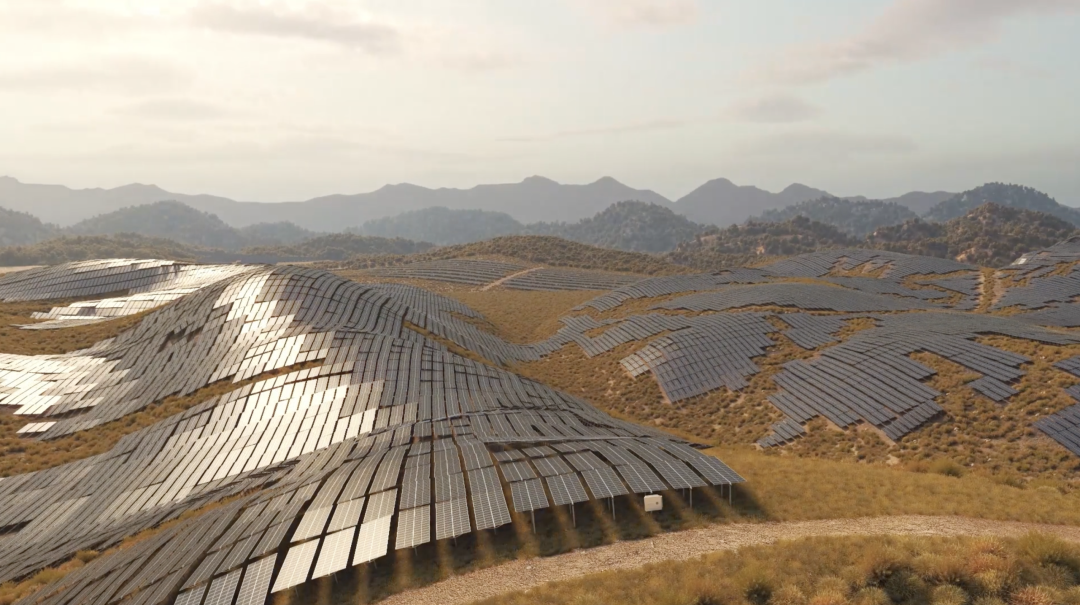
Ground-mounted power plants are entering the ultra-high-power string inverter era. The leap of stand-alone power has enabled the system to successfully achieve “structural subtraction”-fewer devices, shorter cables, and simpler system structures.
In traditional cognition, it is often difficult to have both high power and high precision. However, from a practical point of view, the span of power should be a synchronous transition of management density. If the power of a single machine is doubled, the number of internal MPPT paths is reduced, which is essentially a retrogression of the architecture, not an evolution.
therefore, sige 506kW ground inverter still maintains the” true string “design. The so-called “true string” does not simply adopt a string architecture, but on a high-power platform, it still maintains a sufficiently fine MPPT control accuracy so that each part can be managed independently and accurately.
“fine management, help the annual power generation increased by 2%”
MPPT (maximum power point tracking) is the core control unit of the inverter, and its configuration density directly affects the power generation efficiency and operation performance of the power station.
In the traditional centralized scheme, 1 MPPT is usually connected to more than 20 strings. According to the estimation of about 30 components in a single string, it is equivalent to one MPPT to manage more than 600 components at the same time. An anomaly tends to affect a larger area, and local losses are more likely to be amplified.
in the mainstream string scheme, 1 MPPT is usually connected to 4-5 strings, corresponding to about 120-150 components. Compared with centralized, accuracy has been significantly improved, but in large bases, complex landforms and multi-oriented scenarios, it is still inevitable that “average management” will bring losses.
In some high-power string schemes, although the single-machine power has reached more than 400kW, the number of MPPT paths is often only about 6. This means that one MPPT still needs to cover more than 200 components, the power is increased, and the management range is also increased simultaneously.
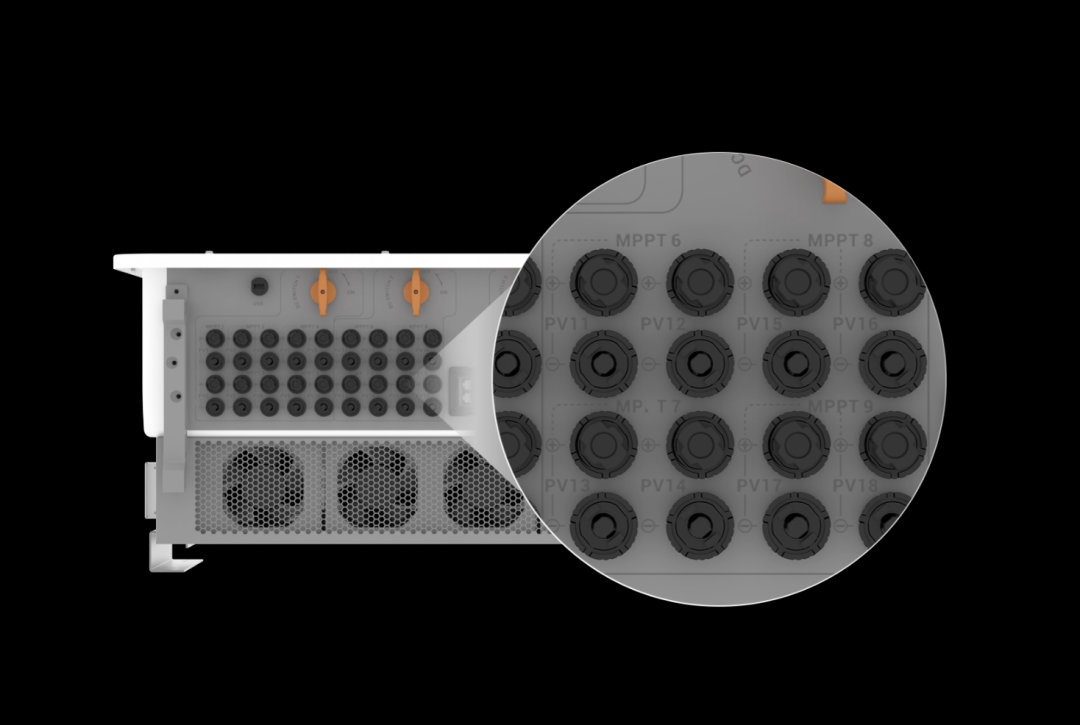
sige 506kW inverter adopts 18 MPPT design and adheres to the” 2 strings and 1 channel “true string configuration mode. each MPPT only manage about 60 components, which has higher optimization efficiency in complex scenarios and can significantly reduce the negative impact of string mismatch.
Calculations show that this design can increase the power generation of the system by about 1.5-2% compared to the extensive scheme. For large power plants, this is by no means a small number, but a huge increase in revenue throughout the life cycle.
“millisecond response, lock every ray of instantaneous sunshine”
Powerful hardware is only the foundation, to make the 18-way MPPT really play the value, can not do without agile software algorithm support. In actual operation, the lighting conditions are always in dynamic change, for the inverter, the maximum power point is not a fixed position, but in constant change.
This means that the ability of MPPT lies not only in “whether it can be found”, but also in “whether it can be found in time and accurately”. The process is optimized by self-developed MPPT algorithm.
In the face of rapid light fluctuations, the Sig algorithm is faster and more accurate
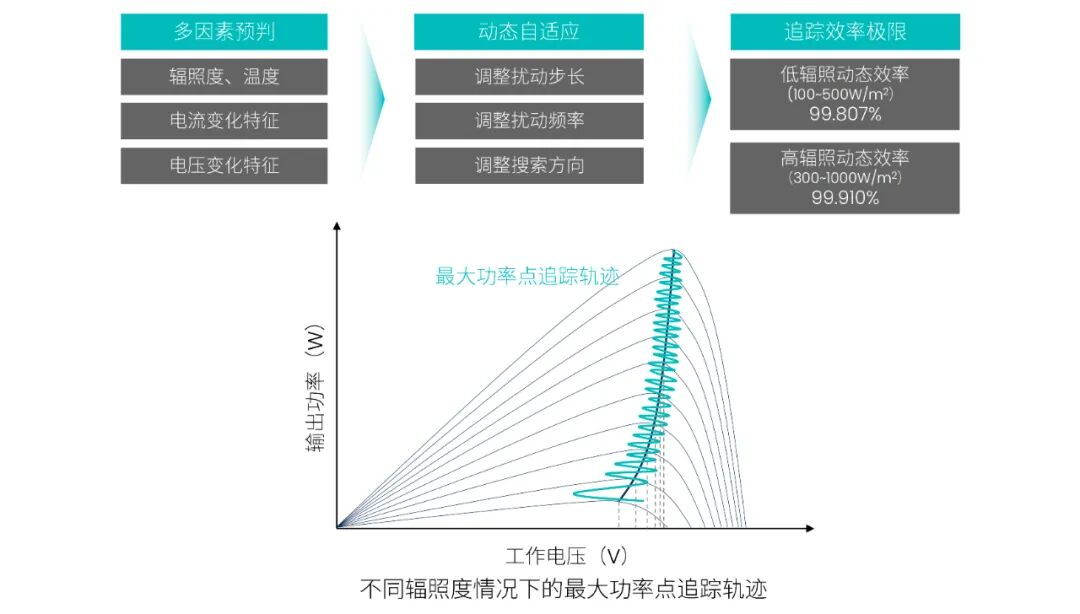
Traditional solutions often rely on a fixed process of “sampling-calculation-execution”. When the light changes rapidly, the control is easy to lag, resulting in the system staying at a non-optimal working point for a short time. The process is optimized by self-developed MPPT algorithm. Relying on multi-factor prediction and dynamic adaptive mechanism, the system can complete judgment and adjustment in milliseconds, and still quickly approach the optimal operating point under complex working conditions, minimizing the power generation loss caused by instantaneous sunlight loss.
when encountering multi-peak curves, sige can always quickly find the real highest point
complex working conditions such as partial occlusion and dust coverage, which will cause multiple peaks in the power curve. Traditional MPPT is easy to stay at a local maximum power point, unable to identify the real global optimal point, resulting in power loss.
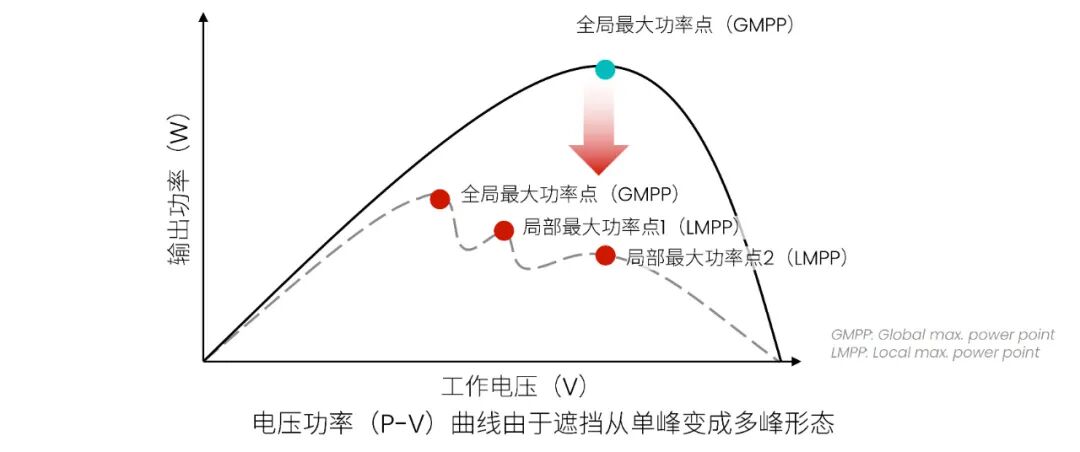
sige adopts the innovative MPPT multi-peak scanning optimization algorithm, which can quickly scan the global curve and accurately identify the real global maximum power point. Even in complex occlusion scenarios, the system can re-lock the optimal operating point in about 10 seconds, while traditional schemes often take 40 seconds or even 1 minute to complete a scan. Under constantly changing lighting conditions, this faster response speed means that the system can return to efficient operation earlier and retain the energy that was originally lost as much as possible.
This ability to combine hard and soft ensures that the Sige ground inverter can approach the physical limit of power generation under complex lighting conditions, so that every ray of sunlight can “return to the warehouse”.
“18 MPPT, build a security” firewall “
In the ground power station, in addition to power generation efficiency, another equally important bottom line is safety.
With the continuous expansion of the system scale, the DC side voltage is higher and the number of strings is more. Any local abnormality may be rapidly amplified. Therefore, the security capability is no longer just “whether there is protection”, but whether it can be detected earlier, positioned faster and handled more accurately.
the basis of sige’s safety logic is the “true string” architecture of 18 MPPT and 2 strings per channel, which not only improves the power generation efficiency, but also limits the risk to a smaller range.
In the traditional scheme, behind a fault signal may correspond to multiple strings and a large number of cables, with long troubleshooting paths and longer downtime. Finding fault clusters in a gigawatt power station is often like looking for a needle in a haystack.
under the architecture of sige, the control unit is refined to every 2 strings. once an alarm occurs in the background, the problem range can converge quickly. Compared with the traditional scheme, the fault location efficiency can be improved by about 15 times, greatly shortening the troubleshooting and downtime, and moving the operation and maintenance from “large-scale search” to “precise location”.
For large ground power stations, truly reliable safety is never to deal with problems, but to make problems more difficult to amplify and easier to solve quickly.
“in the process of power transition, keep the bottom line of refinement”
from the hardware architecture of 18 MPPT, 2 strings and 1 channel, to the algorithm capability of millisecond response and multi-peak scanning, and to the fault detection on the DC side, the 506kW ground inverter wants to answer the same question: when the scale of the power station is getting larger and larger, can the string inverter continue to maintain its core value?
The answer is yes. A high-power platform does not inherently imply rough-and-ready management. Truly advanced high-power string inverters should, while scaling up system capacity, refine power-generation control, enhance fault-diagnosis accuracy, and rigorously maintain safety margins.