In the 25-year life cycle of large-scale ground power stations, if construction is a “100-meter sprint”, then operation and maintenance is a lasting “marathon”.
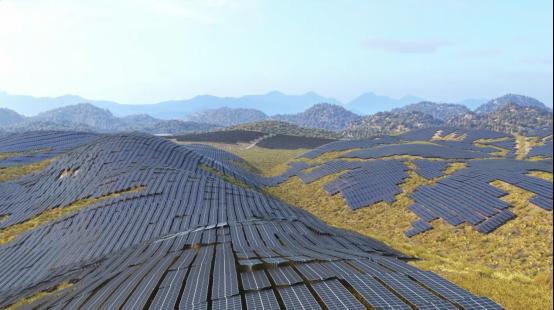
As a single power station moves to the gigawatt (GW) level, the equipment scale increases geometrically. Under the traditional operation and maintenance mode, the slow positioning, difficult elimination and scattered management caused by “many devices, wide distribution and long links” have become a “black hole” that devours the benefits of power stations “.
what sige 506kW ground inverter wants to do is not to patch the old process, but to use AI-driven refinement capability to push the operation and maintenance mode from “people looking for problems” to “problems looking for people” to complete the intergenerational leap and redefine the management accuracy of large ground power stations.
positioning evolution: AI digital maps and redefine the “inspection path”
in desert or mountain power stations with thousands of mu, finding equipment is often the first problem for operation and maintenance personnel. The traditional model relies on paper drawings and personal experience. Once an error is reported, the troubleshooting path is lengthy and relies heavily on skilled workers.
The improvement of inspection efficiency starts with the precise positioning of the physical space. Sger redefined the starting speed of inspection by digital means.
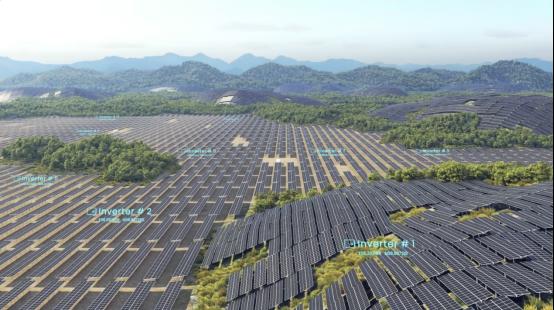
sige fully digitizes the inverter coordinates in the physical space through sige cloud App. Using the device positioning map automatically generated by the AI, the “blind search” has become a “direct navigation”. The location of each Sige inverter is clear at the mobile phone end. At the moment of failure, the system directly marks the coordinates of the specific equipment and plans the optimal path.
at the same time, in the traditional scheme, insulation failure or string abnormality can only be located in one range, and the operation and maintenance personnel need to plug and check dozens of strings one by one, which is like “looking for a needle in a haystack”.
SCG relies on multi-channel MPPT design to sink the fault location capability to MPPT level. Each MPPT path corresponds to only two strings. Once an insulation abnormality occurs, the troubleshooting range can be quickly converged.
From “looking up one piece” to “looking at two strings”, the positioning path is greatly compressed. Compared with the traditional scheme, the fault elimination efficiency can be improved by about 15 times, the downtime is significantly shortened, and the operation and maintenance rhythm is also accelerated.
numerical calculation first: to AI improve power station prediction and scheduling capability
more importantly, sige further brings AI capability into large power station scenarios. Compared with the traditional scheme, which relies more on a single meteorological data, SIG connects equipment data and station data to AI the prediction of energy-enabled optical power, and integrates the real-time status of inverters, component environmental impact, local weather stations and multi-source meteorological prediction data to form more accurate ultra-short-term and short-term prediction capabilities.
This means that SCG ground products can not only improve power generation efficiency, but also help power stations to better predict, dispatch and optimize revenue, so that large ground power stations can further move from “efficient power generation” to “intelligent operation”.
management upgrade: from “looking at the report afterwards” to “viewing the whole process” of digital closed loop
at present, the operation and maintenance of ground power stations often rely on third-party teams, and the scattered personnel and invisible process are the big worries of managers. Siger has integrated the near-end inspection clock-in function in Siger Cloud App, which can require operation and maintenance personnel to enter the inverter within 3-5 meters to complete the inspection check-in, so as to ensure the real occurrence of inspection, the real traceability of the path, and effectively prevent “cloud inspection”.
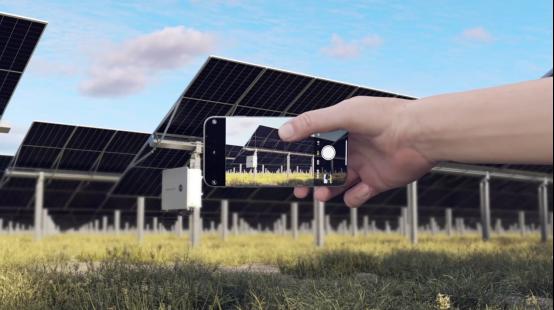
the whole inspection track is digitized, changing operation and maintenance from “post-event result assessment” to “whole-process visual management”, which not only improves the standardization of implementation, also let the management really according.
from equipment positioning, fault elimination, inspection management and power generation prediction, what sige wants to do is not to simply superimpose a few digital tools on the traditional operation and maintenance process, but to truly connect equipment, data and operation and maintenance actions with the help of AI capabilities, so that operation and maintenance can move from decentralization, passivity and dependence on experience to unity, initiative and continuous optimization. For large-scale ground power stations, the future should not only be a simple stacking of power figures, but also a deep integration of fine management and intelligent operation. Through AI redefinition of operation and maintenance, Sige is not only solving the current obstacle removal problem, but also building a set of self-evolving intelligent base for the steady income of the whole life cycle of the power station.