recently, many owners of photovoltaic and energy storage projects have reflected the same confusion: the first and second equipment has been installed and debugged, but it is stuck in the grid connection acceptance process. the following are four common scenarios that exist in the current grid connection of optical storage projects.
Scenario 1: There is a device but no cooperation. The primary frequency modulation device itself can run, but the linkage logic design between the AGC/AVC system is improper, and the frequency response “overshoot” or “late movement” occurs, which directly leads to the failure of acceptance.
Scenario 2: Power prediction accuracy is “easy to say, difficult to reach the standard”. In the past, a large number of newly-built distributed photovoltaic power plants were not equipped with power prediction systems, and many schemes relied on general meteorological data sources. In areas with severe changes in weather or in the transition season of spring and autumn, the prediction error was significantly larger.
Scenario 3: System integration is a black hole. The communication protocols between SCADA, EMS, telecontroling and spacer protection measurement and control devices are different, and multiple systems coexist in the station, which cannot be effectively connected and coordinated.
scenario 4: the function is passed, and the network security check cannot be passed. The requirements of localization and equal protection and reinforcement are becoming more and more stringent. Many schemes operate normally at the functional level, but in the special acceptance of network security, the hardware platform or operating system does not meet the requirements of independent control, forced to rectify, greatly delaying the progress of the project.
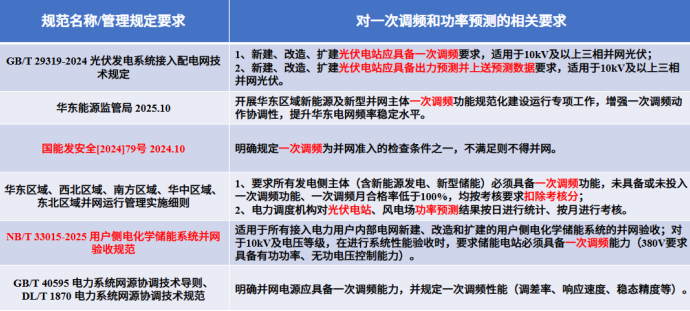
The problem lies in two systems that have been paid little attention to in the past: primary frequency modulation and power prediction. Between 2024 and 2025, a number of mandatory national standards and industry regulations have been implemented one after another, and the nature of these two capabilities has undergone a fundamental change-from “dispensable” in the past to “hard conditions for grid access” today “.
How to solve the above pain points for all parties who are promoting 10kV photovoltaic four-retrofit, user-side energy storage power station construction, or large-scale smart microgrid projects? Shenzhen CLP Power Technology Co., Ltd. (hereinafter referred to as “CET CLP Technology”) has been deeply engaged in the field of secondary equipment and energy management of power system for many years, and has built a complete solution system of “hardware and software system integration” for different project scenarios.
(1)10kV photovoltaic power station-four reconfigurable stock projects bear the brunt
At present, a large number of built industrial and commercial photovoltaics are undergoing four reconfigurable (considerable, adjustable, controllable and predictable). According to GB/T
29319-2024, the transformation project also belongs to the category that must meet the requirements of primary frequency regulation and power prediction.
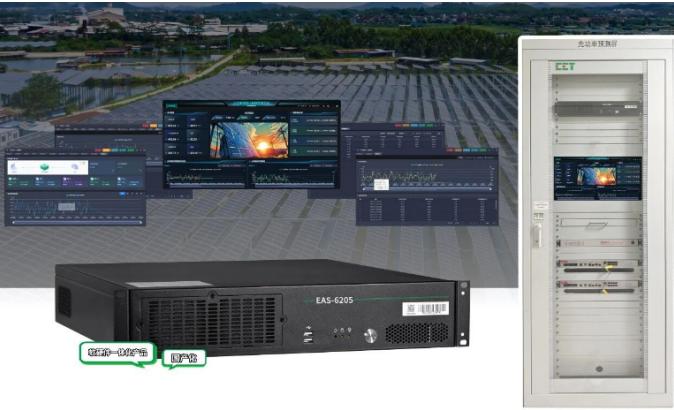
CET has launched an optical power prediction screen, integrating optical power prediction software, numerical weather forecast server, firewall and reverse isolation device into one screen standard cabinet, and adopting a fully domestic hardware platform, in line with the substation secondary system safety protection specifications and equal protection reinforcement requirements, out of the box, rapid deployment, greatly shorten the project duration.
(2) user-side energy storage power station-not only “cutting peak and filling valley”
in the past, the construction logic of industrial and commercial energy storage was relatively simple: seize the peak-valley electricity price difference and charge as much as possible. However, NB/T
33015-2025 explicitly requires that the energy storage on the 10kV user side must have primary frequency modulation capability, otherwise it cannot pass the grid connection acceptance.
After meeting the primary FM, the station can formally participate in the power auxiliary service market and obtain FM revenue. According to the relevant price mechanism in 2024, energy storage and new FM devices can obtain significantly higher compensation benefits than ordinary units due to their far superior response speed and accuracy. compliance costs, with the opportunity to translate into new revenue streams.
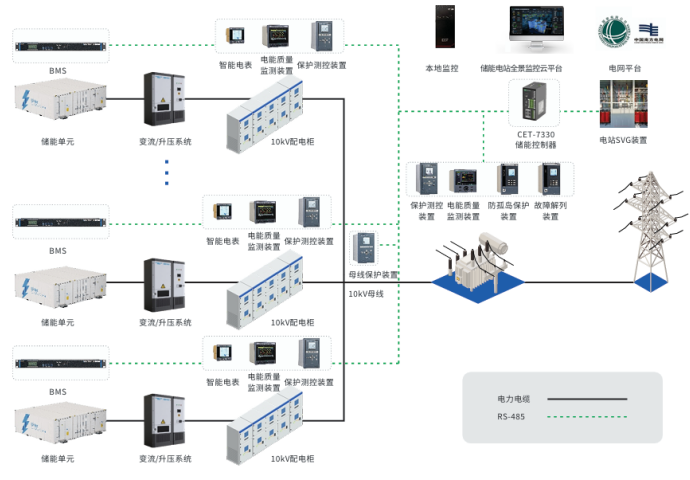
(3) How to coordinate and control the smart microgrid?
Large industrial parks, hospitals, data centers and other scenarios for photovoltaic storage, involving dynamic synergy of photovoltaic, energy storage, and load. Such projects should not only meet the requirements of primary frequency regulation, but also ensure the coordinated control of each unit in the microgrid. Otherwise, when the primary FM response is made, the optical storage units may cancel each other out, which is not only ineffective, but also may cause system oscillation. The requirements for the software capability and system integration depth of the microgrid coordinated control system are much higher than those of a single scenario.
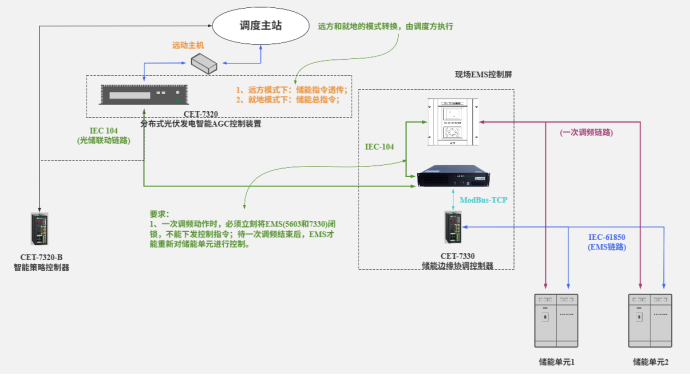
CET, relying on years of construction experience in photovoltaic and energy fields, realizes unified dispatching of light, storage and load by providing microgrid coordination and control system software to prevent inter-unit adjustment conflicts; auxiliary service market access, optical storage joint system unified participation in FM, standby and other auxiliary service varieties to help customers multi-station centralized monitoring and operational analysis.
at present, the systems and products of CET electric technology have been applied to many new energy projects. in the typical application scenario of optical storage integration in rail transit, the customer needs not only to realize the power adjustment instructions issued by the photovoltaic side and the energy storage side respectively in response to the power grid dispatching, but also to realize the joint operation control of the optical storage system to realize more complex control strategies. CET CLP Technology has specially designed a coordination mechanism for the microgrid fast frequency control system and the microgrid coordinated control system to clarify the arbitration logic of FM response priority and power command, and prevent the two systems from issuing contradictory control commands at the same time. At the same time, the energy storage side dynamically monitors the SOC of each energy storage unit during the charging and discharging adjustment process, and actively balances and optimizes the control, and continuously corrects the inconsistency between battery clusters during the charging and discharging process.
at present, the two requirements of “national energy development safety [2024] No. 79) document” and “NBT 33015-2025
acceptance specification for grid connection of electrochemical energy storage system on the user side” have been fully implemented. For all parties who are pushing forward the project: plan early and do not panic when accepting the project; The cost of rework and rectification often far exceeds the cost of investment in advance. CET Technology helps customers realize safe and efficient operation and maintenance management of photovoltaic systems through rich application cases and years of industry experience.