The curtain of the “Fifteenth Five-Year Plan” has been opened, and the golden age of the energy storage industry is surging.
“Ten years of facing the wall, ten years of sharpening the sword. Today, China’s energy storage industry has achieved a key leap: the energy storage industry is gradually moving from policy-driven to market-driven, from mandatory allocation and storage to value creation. Energy storage has been deeply integrated into the process of the new energy revolution, becoming an important part of the new power system and stepping into the center of the stage of the new era’s energy system.” Chen Haisheng, chairman of the Zhongguancun Energy Storage Industry Technology Alliance, said at the opening ceremony of the “14th Energy Storage International Summit” held recently that in 2026, the dimension of competition in the energy storage industry will undergo new changes. From the single-dimensional contest with “hardware cost” as the core in the past, it has gradually shifted to multi-dimensional competition around “full life cycle value creation ability.
The curtain of the “Fifteenth Five-Year Plan” has been opened, and the golden age of the energy storage industry is surging. New energy storage has become one of the country’s six emerging pillar industries, is the new quality of energy transformation productivity, but also the global artificial intelligence and computing power model energy base of the key support. Looking to the future, the energy storage industry will enter a new stage of high-quality development with “value reconstruction, scene innovation and global win-win” as the core.
from scale to full scene penetration
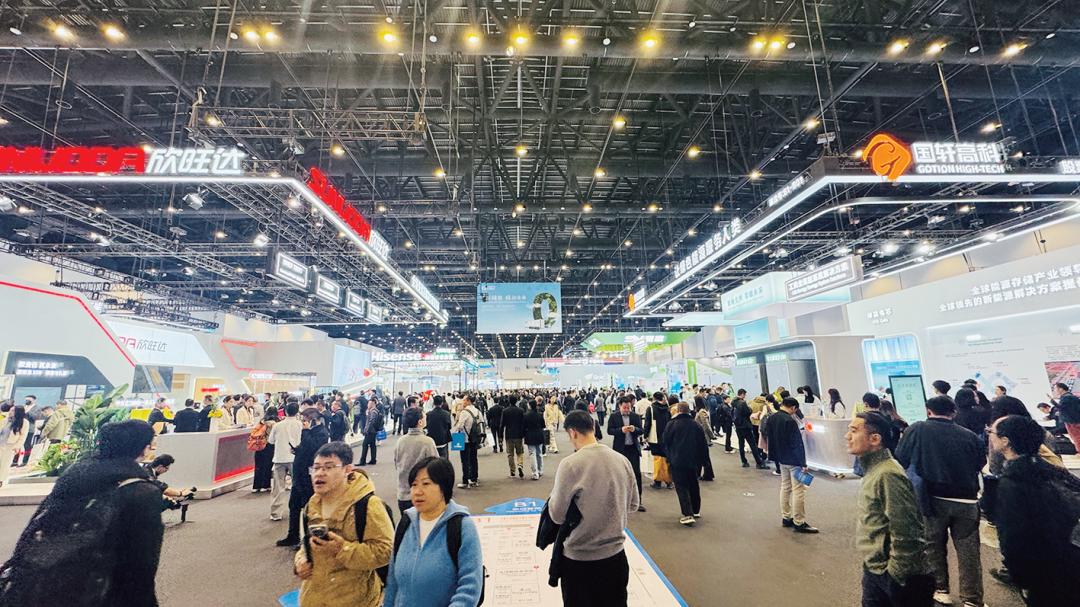
“14th Five-Year” period, china’s energy storage development speed and scale far exceed expectations. Liu Deshun, chief engineer of the National Energy Administration and director of the Department of Energy Conservation and Technology Equipment, said that as of the end of 2025, the installed capacity of new energy storage systems that have been completed and put into operation across the country has reached 0.136 billion kilowatts, a significant increase of 84% from the end of 2024. Compared with the end of the “Five-Year Plan”, the installed capacity has increased by more than 40 times, and the installed capacity ranks first in the world. At the same time, the average duration of energy storage increased to 2.58 hours. During the peak summer of 2025, the maximum available power of the new energy storage in the national network operation area will exceed 64 million kilowatts, and the real-time maximum discharge power will exceed 44 million kilowatts. The equivalent utilization hours of the new energy storage nationwide will reach 1195 hours, up nearly 300 hours from 2024. Energy storage has actually shifted from “demonstration running” to “main support”.
Energy storage technology route has formed a pattern of blossoming and multi-echelon. Chen Haisheng pointed out that according to the industrial data of 2025, pumped storage and lithium batteries in the first tier have been applied on a large scale. The compressed air, liquid flow battery, lead storage and heat storage and cold storage in the second tier are in the stage of popularization and application. For example, several 300000-kilowatt compressed air and 100000-kilowatt liquid flow battery projects have been put into operation. Sodium ion, flywheel and supercapacitor in the third tier are transforming from demonstration to application. China’s energy storage technology from “follow” to “run”, and now has “lead”.
Cui Jian, president of Xiamen kehua digital energy technology co., ltd., pointed out that under the background that Fengguang new energy has gradually become the main body of the new power system, energy storage has changed from a dispensable “supporting role” to a “just need” to ensure the safe and stable operation of the power grid “. Energy storage is from the large base supporting to the centralized and distributed combination of the full scene coverage, forming a “light storage charge” “energy storage and hydrogen production” “mining area micro-network” “island micro-network” and other multi-integration mode, completely breaking the internal boundaries of the power system.
Today, energy storage has accelerated to the independent energy storage power station, distributed optical storage zero carbon park, intelligent computing center, low-altitude economic support, port power and other new business extension. According to Xu Qingqing, vice president of Sungrow Power Supply Co., Ltd. and president of the energy storage division, energy storage has fully entered the “S + energy storage” era and is being upgraded from a single energy storage device to a system-level energy hub.
Core challenges need to be solved when entering deep water
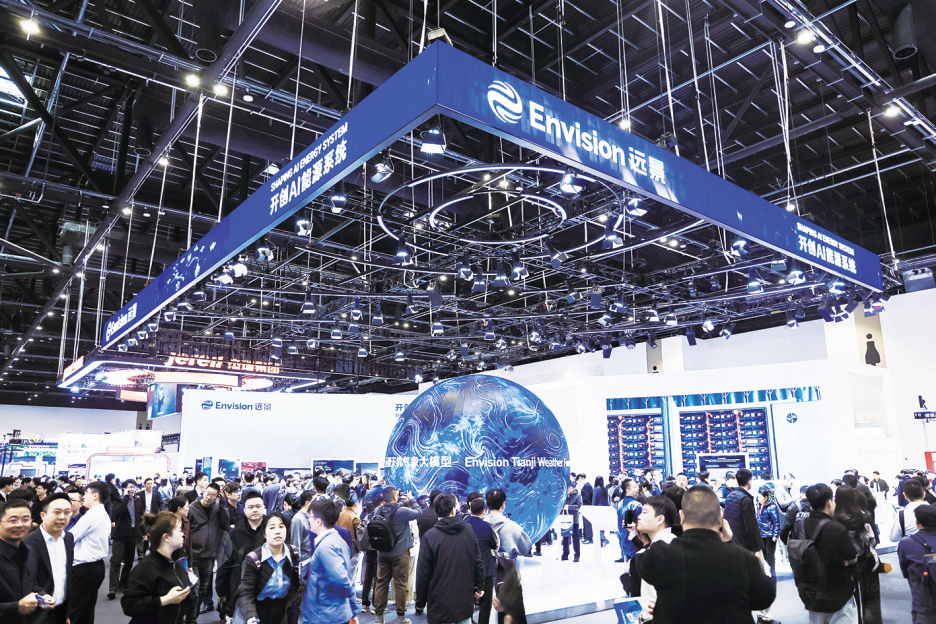
, however, if the energy storage industry is to continue to move forward, it must face and solve a series of industry pain points and challenges.
First of all, the market mechanism and project management norms of the energy storage industry still need to be improved. The latest data released by Zhongguancun Energy Storage Industry Technology Alliance reflects the hidden worries of the industry. In 2025, the EPC construction cost of the 2-hour energy storage system will drop to 1043.82 yuan/kWh, a year-on-year decrease of 13%, and the price will fluctuate downward. In the case of “price reduction”, if there is no mature market mechanism to support, the economy of energy storage projects will face a severe test.
Xu Qingqing analyzed that how to make a profit from energy storage is the core issue. The scale of the power market in different regions varies greatly. It is necessary to speed up the transformation from a single energy storage device to a system-level energy hub and build a diversified profit model of “guaranteed by capacity electricity price, flexible by spot arbitrage and value-added by auxiliary services.
Secondly, the energy storage industry is facing the double test of security bottom line and technology maturity. The safety of energy storage systems has always been the sword of Damocles hanging over the top of the industry. Chen Haisheng stressed that security is still the focus of the development process of energy storage, the domestic pay more attention to the whole chain of safety supervision. From the perspective of the industry, how to ensure that energy storage does not cause safety accidents such as fires in large-scale, high-density integrated applications is still a threshold that the industry must cross.
Again, the energy storage industry is also facing the challenge of supply chain remodeling and globalization barriers. Shi Yubo, chairman of the China Energy Research Association, reminded that the current global energy storage supply chain is shifting from the pursuit of global efficiency to the pursuit of regional security. The policy-driven trend of enterprise localization and supply chain multi-polarization has accelerated, which puts forward higher requirements for the ability of Chinese energy storage enterprises to go to sea, the ability of overseas localization operation and the ability to deal with international technical barriers.
Energy storage presents full life cycle value reconstruction
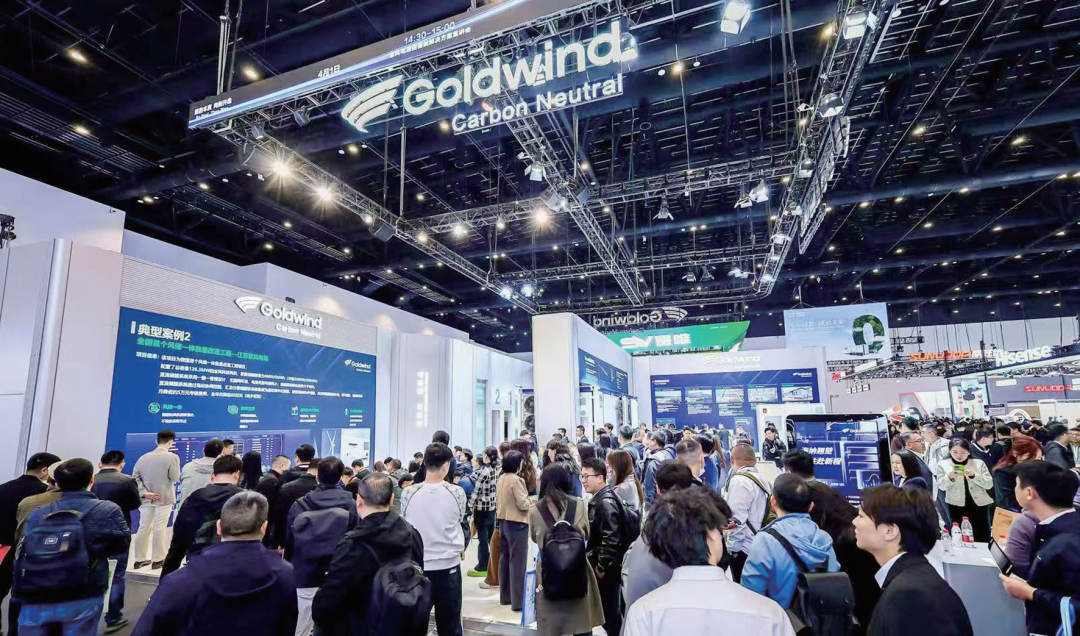
Looking at the next five to ten years, energy storage will no longer be just an “accessory” of the power system, but will become the core of the national energy strategy and green development. The industry believes that the future development of energy storage will show the whole life cycle value reconstruction, AI empowerment to reshape the system form, energy storage to accelerate the ecological sea and other trends.
Chen Haisheng believes that energy storage will enter a new stage of value reconstruction, from the “key support” to the “core pillar” strategy. This means that the future evaluation of the value of energy storage, no longer just look at the cost of its equipment, but look at its planning, construction, operation, retirement of the whole cycle, to provide the system with electrical energy, capacity, auxiliary services, green power environmental value and other multi-dimensional comprehensive contribution.
As the penetration rate of new energy approaches the limit, the traditional “follow-up” energy storage will not be able to meet the demand, and the network type and long-term energy storage will rise. Cui Jian pointed out that the network-based technology gives the energy storage voltage frequency the ability to independently build and system support, can solve the multi-day or even cross-season balance problem, so that it from a single-function equipment into a set of regulation, control, stability, trading in one of the system-level assets.
Chen Haisheng specifically mentioned that “AI + energy storage” is becoming a hot spot in current technology research and development, and the future use of AI scheduling energy storage will maximize the value of the whole life cycle. In addition, with the landing of the capacity compensation mechanism, the early commercialization of long-term energy storage such as flow batteries and compressed air is coming. It is expected that by 2030, the average cumulative installed time will increase from 2.58 hours now to 3.47 hours. In particular, it should be noted that the proportion of independent energy storage has been greatly increased to 61%, and it will become an important subject in the future to reconstruct the core capabilities of the power system.
It is more noteworthy that with the explosion of AI computing power demand, the energy storage project of the artificial intelligence data center scenario is accelerating the layout. Chen Haisheng judged: “Artificial intelligence data center energy storage will become the core support of computing infrastructure.” High energy consumption, high reliability power demand, will open the 1 trillion yuan blue ocean market for energy storage.
Chen Haisheng predicts that by 2030, the cumulative installed capacity of China’s energy storage is expected to reach more than 0.37 billion kilowatts. This huge domestic basic disk will provide the most solid backing for China’s energy storage technology to go global.
Liu Deshun said that the National Energy Administration will strengthen international exchanges in all aspects and support Chinese companies to go global. In the future, the sea of Chinese energy storage enterprises will be upgraded from a simple “product export” to an ecological level of “technology output, standard docking, localized production and service.
From the “14th Five-Year Plan” to the value reshaping of the “15th Five-Year Plan”, China’s energy storage industry is undergoing a great leap from quantitative change to qualitative change. 2026 is a new year for China’s energy storage to mature and go to the world.