In the context of accelerating the construction of new power systems, the high proportion of renewable energy access brings challenges such as weak inertia, weak support, and strong fluctuations. Grid-type technology came into being, so that the power electronic equipment from the “current source” into the active construction of the grid “voltage source”. He Mai 1725kW flagship strong network PCS is the leading work of this technical route, with hard core strength to deal with all kinds of extreme scenarios.
” structural “stability
reshaping power grid dynamic support
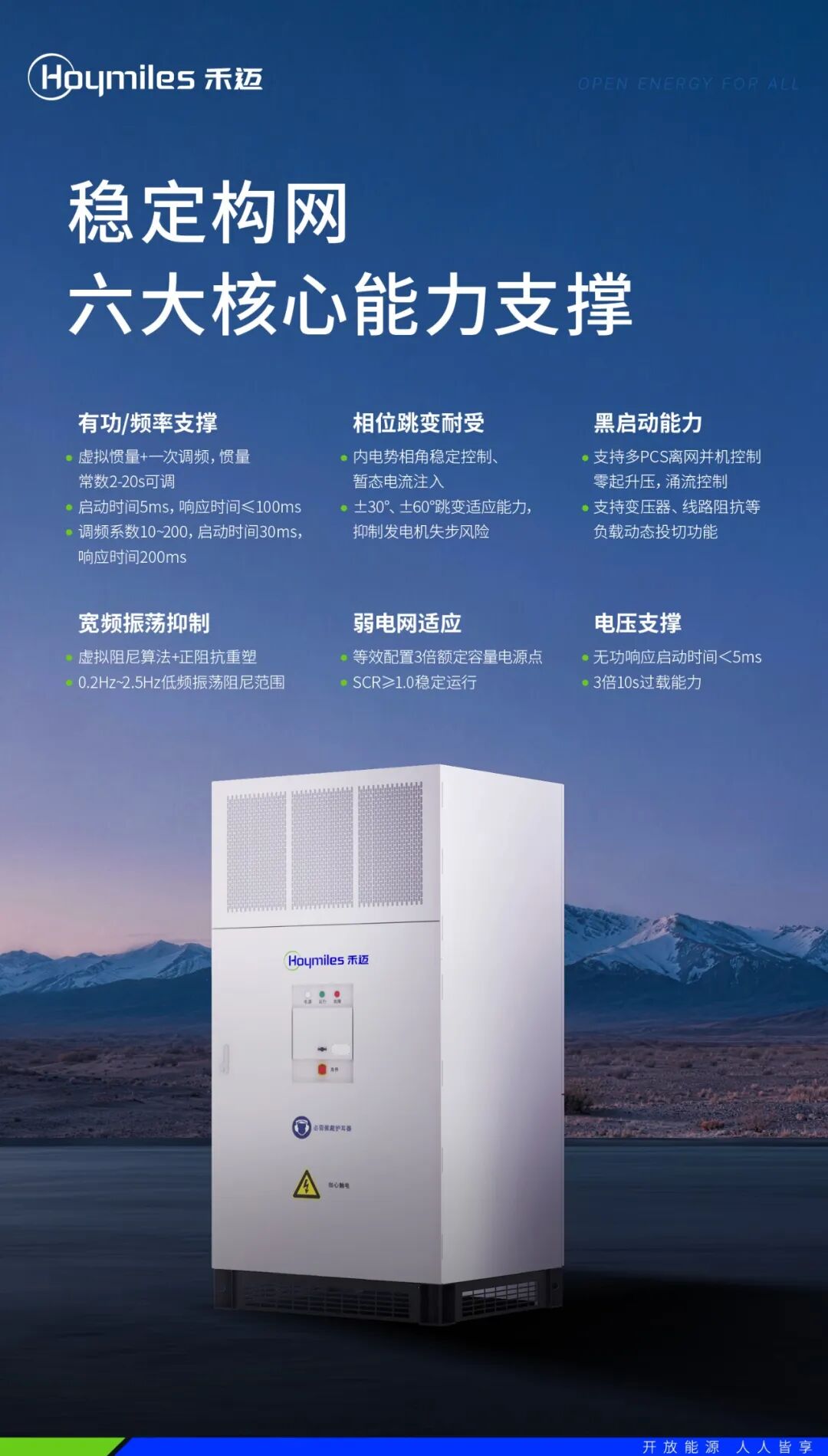
active power/frequency support: deep fusion of virtual inertia and primary frequency modulation dual mechanism, inertia constant can be 5ms, response time ≤ 100ms; The frequency modulation coefficient covers a wide adjustment range of 10-200, 30ms, and a response time of 200ms, achieve fast and accurate active response from transient to steady state.
broadband oscillation suppression: impedance reshaping technology, effective
phase jump tolerance:
voltage support:
weak grid adaptation:
stable operation under grid conditions,
black start capability:
“flexible structure”
extreme adaptation and minimalist operation and maintenance
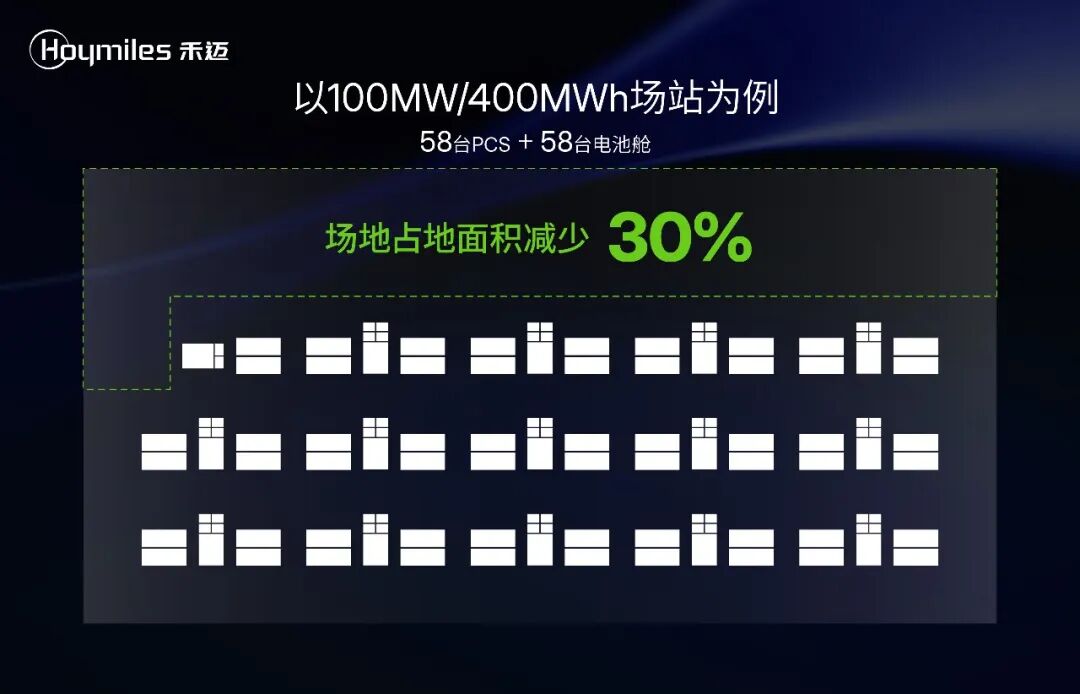
” structure “reliable
hardcore quality, no fear of challenges
efficiency and reliability are the ultimate yardstick for measuring the commercial value and life cycle cost of equipment. He Mai 1725kW network PCS also spares no effort in these two aspects.
Through advanced liquid cooling design, the new product achieves a maximum efficiency of 99.04 percent, minimizing losses in the energy conversion process and creating tangible economic benefits for customers.
From extremely cold -40 ℃ to extremely hot +60 ℃, the equipment can operate stably. In the high temperature environment of 51 ℃, it can still guarantee the rated power without derating operation; at 40 ℃, it can even realize the long-term overload operation of 1.1 times the power. This exceptional temperature resistance enables it to easily handle a wide range of climatic conditions worldwide.
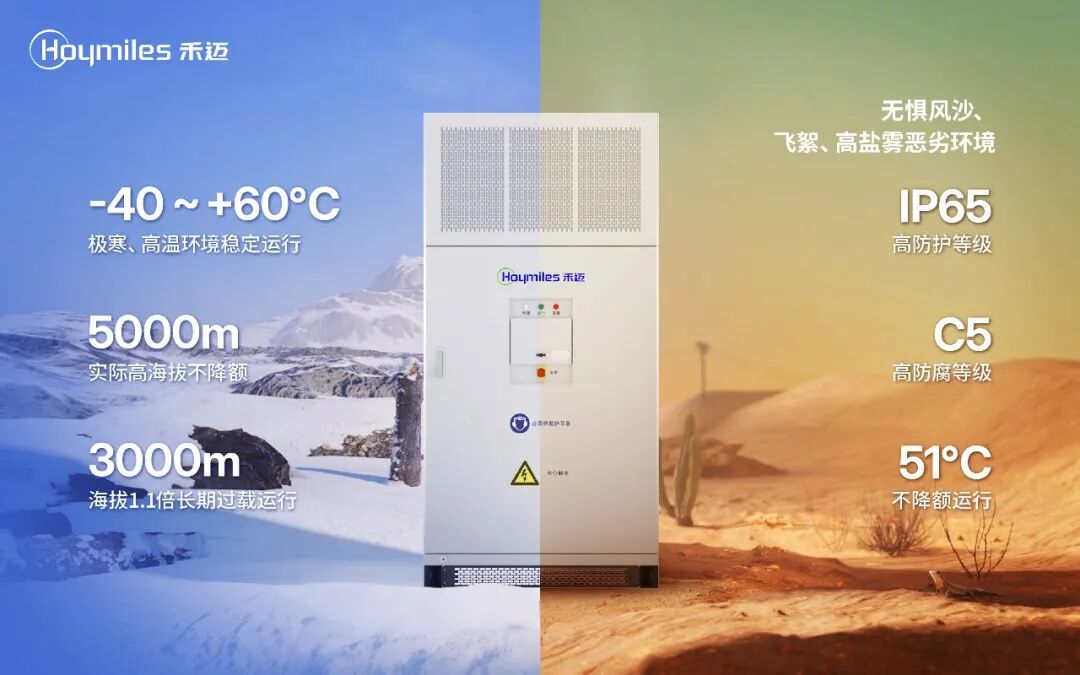
1.1 times long-term overload capacity.