Recently, many owners of photovoltaic and energy-storage projects have reported a common challenge: after the primary and secondary equipment has been installed and commissioning completed, they are still stuck at the grid-connection acceptance stage. Below are four typical scenarios currently encountered in the grid connection of PV‑storage projects.
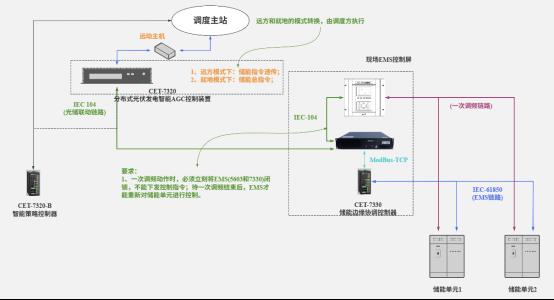
Scenario 1: There is equipment, but no coordination. The primary frequency regulation unit is capable of operating on its own, but the interlock logic between it and the AGC/AVC system is improperly designed, resulting in either “overshoot” or “delayed response” in the frequency response. This directly leads to failure during commissioning and acceptance testing.
Scenario 2: Power forecast accuracy is “easy to talk about, but hard to achieve.” In the past, a large number of newly commissioned distributed PV power plants were not equipped with power forecasting systems. Many of these projects relied on generic meteorological data sources, resulting in significantly high forecast errors in regions with rapidly changing cloud cover or during the spring and autumn transition seasons.
Scenario 3: System integration is a black hole. The communication protocols among SCADA, EMS, telecontrol systems, and bay-level protection and control devices differ, resulting in multiple coexisting systems within a substation that cannot be effectively interconnected or coordinated.
Scenario 4: The functionality works, but it fails the cybersecurity review. Domestication requirements and cybersecurity classification protection enhancement requirements are becoming increasingly stringent. Many projects function properly at the application level, but during the specialized cybersecurity acceptance review, they are forced to undergo remediation because their hardware platforms or operating systems fail to meet domestic controllability requirements, resulting in significant delays to the project schedule.
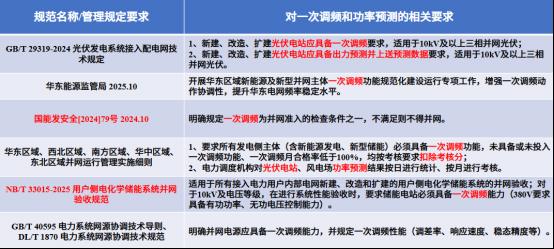
The problem lies in two systems that used to receive little attention: primary frequency modulation and power prediction. Between 2024 and 2025, a series of mandatory national standards and industry regulatory provisions were successively implemented. As a result, the nature of these two capabilities has undergone a fundamental transformation: they have shifted from being “optional” in the past to “rigid grid-connection access requirements” today.
For stakeholders advancing 10kV photovoltaic “four-ability” upgrades, user-side energy storage power station construction, or large-scale smart microgrid projects, how can these pain points be addressed? Shenzhen CET Power Technology Co., Ltd. (referred to as “CET”) has been deeply engaged in the secondary equipment and energy management sectors of power systems for many years, developing a comprehensive “hardware–software–system integration” solution framework tailored to diverse project scenarios.
(1) 10kV PV Power Plants – Existing Projects Eligible for the “Four Capabilities” Upgrade Are First in Line
Currently, a large number of commissioned commercial and industrial PV systems are undergoing “four capabilities” upgrades (visibility, adjustability, controllability, and predictability). According to GB/T 29319-2024, the transformation project also belongs to the category that must meet the requirements of primary frequency regulation and power prediction.
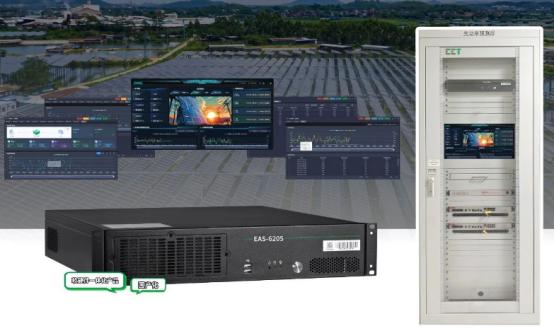
The optical power prediction screen is launched, integrating optical power prediction software, numerical weather prediction server, firewall and reverse isolation device into a standard screen cabinet, the use of a fully domestic hardware platform, in line with the substation secondary system safety protection specifications and other protection and reinforcement requirements, out of the box, rapid deployment, greatly shorten the project duration.
(2) User-Side Energy Storage Power Plants – Much More Than Just “Peak Shaving and Valley Filling”
In the past, the rationale for deploying commercial and industrial energy storage was relatively straightforward: capitalize on the peak-to-valley price differential by maximizing charge and discharge cycles. However, NB/T 33015-2025 explicitly requires that the energy storage on the 10kV user side must have primary frequency modulation capability, otherwise it cannot pass the grid connection acceptance. After meeting the primary frequency regulation requirements, the power plant can officially participate in the electricity ancillary services market and earn frequency regulation revenue. Under the 2024 pricing mechanism, energy storage systems and new-type frequency regulation units, owing to their significantly faster response times and higher precision compared with conventional generating units, are eligible for compensation revenues that substantially exceed those of standard units. Compliance costs can be transformed into new revenue streams.
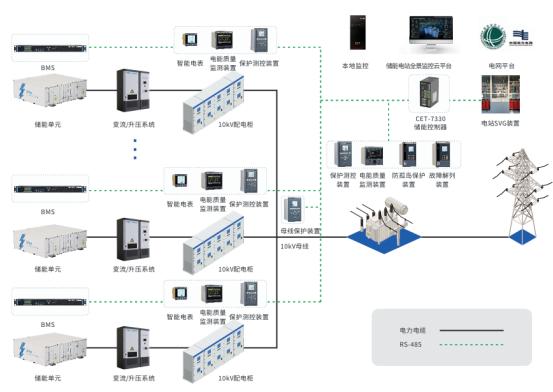
(3) How to coordinate and control smart microgrids?
Large industrial parks, hospitals, data centers and other scenarios for photovoltaic storage, involving dynamic synergy of photovoltaic, energy storage, and load. Such projects must not only meet the grid-connection requirements for primary frequency regulation but also ensure coordinated control among all components within the microgrid. Otherwise, during a single frequency regulation event, the energy storage unit and the photovoltaic system may cancel each other out, rendering the response ineffective and potentially inducing system oscillations. The software capabilities and the depth of system integration required for a microgrid coordination control system are significantly higher than those for a single-use case.