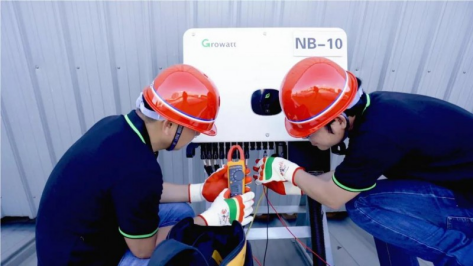
As an electronic product, solar inverters have a service life due to the limitation of its electronic components. The service life is determined by the quality of the product, the installation and use environment, as well as operation and maintenance. So how to improve the service life of the inverter through correct installation, use and operation and maintenance?
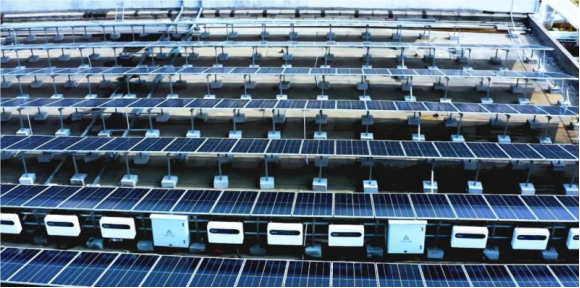
The main factors that affect the service life of the inverter are:
1. The internal temperature of the inverter
2. The input voltage and current parameters
3. The external environment
The internal temperature of the inverter
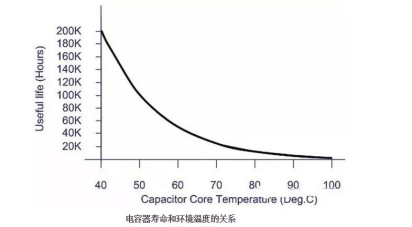
The temperature inside the inverter is the most important factor affecting the life of the inverter. Excessive temperature will reduce the performance and life of the components. The capacitor of the inverter is the key.
For every 10 degree decrease in the ambient temperature, the life of the capacitor doubles. Every 10 degree increase in the ambient temperature, the life of the capacitor is shortened by half.
The inverter itself is a heat source. The power modules, inductors, switches, cables and other circuits inside will generate heat. All the heat must be dissipated in time, otherwise the internal temperature will rise. Therefore, heat dissipation is the key in R&D and design.
At present, natural cooling and air cooling are mostly used in inverters. Low power inverters mainly use natural cooling, and high power inverters mainly adopts the air cooling method.
However, to ensure the stability of the internal temperature of the inverter, special attention must also be paid to installation and use:
(1) It is preferable that the inverter be installed in a ventilated place. If it must be installed in an enclosed space, an air duct and exhaust fan, or an air conditioner must be installed. It is strictly prohibited to install the inverter in a closed box.
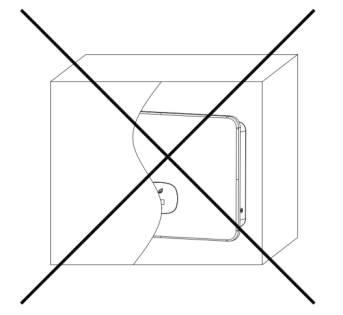
▲It is strictly forbidden to install the inverter in a closed box.
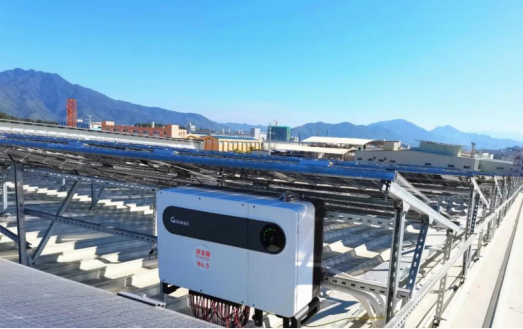
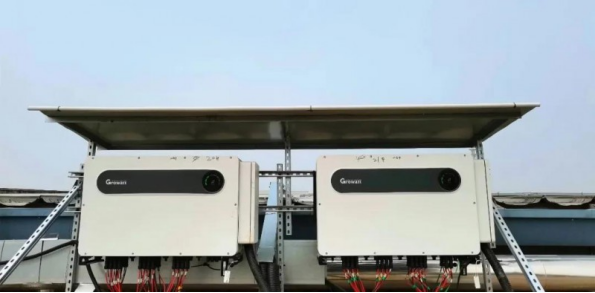
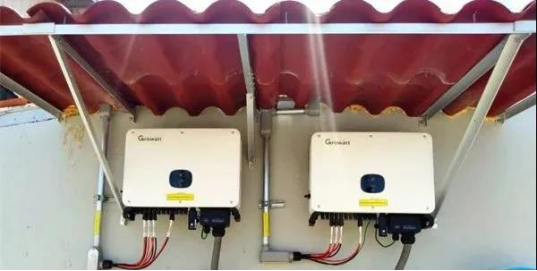
(2) The location of the inverter should be avoided as far as possible from direct sunlight. If the inverter is installed outdoors, it is best to install it under the eaves on the sun-backed surface or under the solar modules, with eaves or modules shading the inverter. If it can only be installed in an open place, it is recommended to install a sunshade canopy above the inverter.
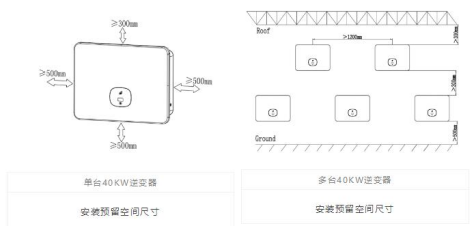
(3) Whether it is the installation of a single inverter or multiple inverters, the installation space size given by the manufacturer must be strictly followed to ensure that the inverter has sufficient ventilation space and operation space.
(4) The inverter should be installed as far away as possible from high-temperature areas such as boilers, oil-fired hot air blowers, heating pipes, and external units of air conditioners, etc.
Input voltage and current parameters of the inverter
Improper matching of the inverter’s input voltage and current parameters will also affect the life of the inverter. The higher the voltage or current the internal components of the inverter bear, the shorter the life of the components will be.
Let’s take the MAX 100-125KTL3-X series inverter as an example. The input working voltage range of this series inverter is 200-1000V. If the voltage is too low, the current will be too high and close to the critical state. If the input voltage is too high, the current will decrease, but the voltage will be close to the critical state. In this case, the inverter’s power generation efficiency and life expectancy will both be affected. Therefore, we generally recommend that the string input working voltage is configured to the rated voltage of about 600V.
The external environment
The external environment in which the inverter operates is also an important factor affecting the life of the inverter. At present, the protection level of string inverters can reach IP65 or even IP66. It can prevent dust, rain, and salt spray corrosion, and can adapt to harsh environments. However, in places with serious pollution or dust, dirt may fall on the radiator, affecting its performance.
Dust, leaves, mud and other fine objects may also enter the air duct of the inverter, which will affect the heat dissipation and the service life. In this case, it is particularly important to clean up the dirt on the inverter or the cooling fan on a regular basis, so that the inverter can have good heat dissipation conditions.
One end of the inverter is connected to the solar array, and the other end is connected to the grid. The power quality of the grid will also affect the life of the inverter. For example, the unstable voltage of grids in rural areas may trigger the protection mechanism of the inverter. If the inverter is shut down and restarted too often, the service life of the inverter will be reduced.
Inverters are manufactured with almost the same service life after many rounds of quality check. Therefore, installation and O&M have become key factors in increasing the life expectancy.
In order to improve the actual service life of the inverter, it is necessary to create a good operating environment to protect it from wind, sun, and rain. It is also necessary to conduct regular inspections to make sure that the inverter’s air duct is unobstructed to avoid over-temperature derating and other failures.